IELTS READING – AUSTRALIA’S SPORTING SUCCESS S33AT1

 IELTS Reading AUSTRALIA’S SPORTING SUCCESS reading practice test has 10 questions belongs to 🏅 Sports & Society subject..

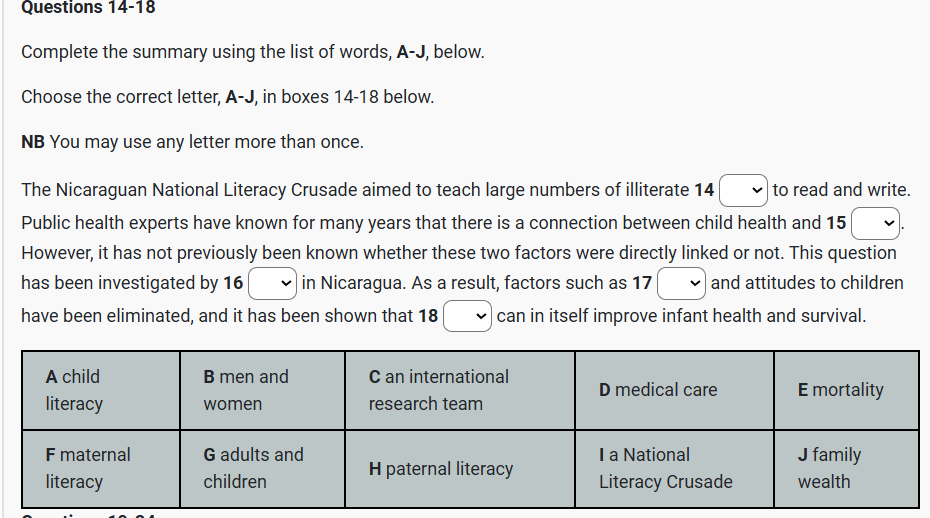
A. They play hard, they play often, and they play to win. Australian sports teams win more than their fair share of titles, demolishing rivals with seeming ease. How do they do it? A big part of the secret is an extensive and expensive network of sporting academies underpinned by science and medicine. Q6 At the Australian Institute of Sport (AIS), hundreds of youngsters and pros live and train under the eyes of coaches. Another body, the Australian Sports Commission (ASC), finances programmes of excellence in a total of 96 sports for thousands of sportsmen and women. Both provide intensive coaching, training facilities, and nutritional advice.

B. Inside the academies, science takes centre stage. The AIS employs more than 100 sports scientists and doctors and collaborates with scores of others in universities and research centres. Q1 AIS scientists work across a number of sports, applying skills learned in one – such as building muscle strength in golfers – to others, such as swimming and squash. They are backed up by technicians who design instruments to collect data from athletes. They all focus on one aim: winning. ’Q3 We can’t waste our time looking at ethereal scientific questions that don’t help the coach work with an athlete and improve performance,’ says Peter Pricker chief of science at AIS.

C. A lot of their work comes down to measurement – everything from the exact angle of a swimmer’s dive to the second-by-second power output of a cyclist. This data is used to wring improvements out of athletes. The focus is on individuals, tweaking performances to squeeze an extra hundredth of a second here, an extra millimetre there. No gain is too slight to bother with. It’s the tiny, gradual improvements that add up to world-beating results. Q2 To demonstrate how the system works, Bruce Mason at AIS shows off the prototype of a 3D analysis tool for studying swimmers. A wire-frame model of a champion swimmer slices through the water, her arms moving in slow motion. Looking side-on, Mason measures the distance between strokes. From above, he analyses how her spine swivels. When fully developed, this system will enable him to build a biomechanical profile for coaches to use to help budding swimmers. Mason’s contribution to sport also includes the development of the SWAN (SWimming ANalysis) system now used in Austral an national competitions. Q8 It collects images from digital cameras running at 50 frames a second and breaks down each part of a swimmer’s performance into factors that can be analysed individually – stroke length, stroke frequency, average duration of each stroke, velocity, start, lap, and finish times, and so on. At the end of each race, SWAN spits out data on each swimmer.

D. Take a look,’ says Mason, pulling out a sheet of data. He points out the data on the swimmers in second and third place, which shows that the one who finished third actually swam faster. So why did he finish 35 hundredths of a second down? ‘His turn times were 44 hundredths of a second behind the other guy,’ says Mason.’If he can improve on his turns, he can do much better.’This is the kind of accuracy that AIS scientists’ research is bringing to a range of sports. Q5 With the Cooperative Research Centre for Micro Technology in MelbourneQ9 they are developing unobtrusive sensors that will be embedded in an athlete’s clothes or running shoes to monitor heart rate, sweating, heat production, or any other factor that might have an impact on an athlete’s ability to run. There’s more to it than simply measuring performance. Pricker gives the example of athletes who may be down with coughs and colds II or 12 times a year. Q10 After years of experimentation, AIS and the University of Newcastle in New South Wales developed a test that measures how much of the immune-system protein immunoglobulin A is present in athletes’ saliva. If lgA levels suddenly fall below a certain level, training is eased or dropped altogether. Q8 Soon, lgA levels start rising again, and the danger passes. Since the tests were introduced, AIS athletes in all sports have been remarkably successful at staying healthy.

E. Q7 Using data is a complex business. Q12 Well before a championship, sports scientists and coaches start to prepare the athlete by developing a ‘competition model’, based on what they expect will be the winning times. ’You design the model to make that time,’ says Mason.’A start of this much, each free-swimming period has to be this fast, with a certain stroke frequency and stroke length, with turns done in these times.’All the training is then geared towards making the athlete hit those targets, both overall and for each segment of the race. Techniques like these have transformed Australia into arguably the world’s most successful sporting nation.

F. Q4 Of course, there’s nothing to stop other countries copying – and many have tried. Some years ago, the AIS unveiled coolant-lined jackets for endurance athletes. Q13 At the Atlanta Olympic Games in 1996, these sliced as much as two percent off cyclists’ and rowers’ times. Q11 Now everyone uses them. The same has happened to the ‘altitude tent’, developed by AIS to replicate the effect of altitude training at sea level. But Australia’s success story is about more than easily copied technological fixes, and up to now no nation has replicated its all-encompassing system.


Prepare for IELTS Effectively Using IELTS Simulator Ace the IELTS

phone icon
8439000086
8439000087
7055710003
7055710004
IELTS Simulation 323 GMS Road, Near Ballupur Chowk, Dehradun, India
Chat on WhatsApp
email: info at ieltsband7.com

IELTS READING – The effects of light on plant and animal species S32AT3

 IELTS Reading Flawed The effects of light on plant and animal species reading practice test has 10 questions belongs to Engineering & Materials Technology subject..

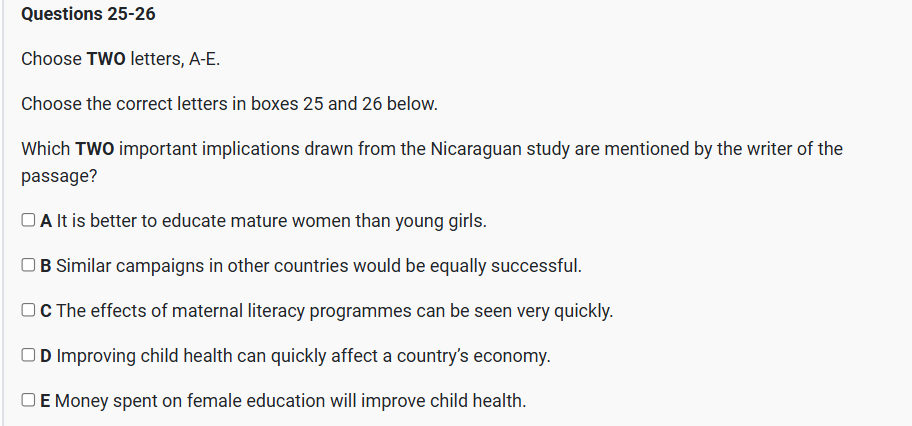
Light is important to organisms for two different reasons. Firstly it Is used as a cue for the timing of daily and seasonal rhythms in both plants and animals, and secondly it is used to assist growth in plants.

Breeding in most organisms occurs during a part of the year only, and so a reliable cue is needed to trigger breeding behaviour. Day length is an excellent cue, because it provides a perfectly predictable pattern of change within the year. In the temperate zone in spring, Q34 temperatures fluctuate greatly from day to day. but day length increases steadily by a predictable amount. Q27 The seasonal impact of day length on physiological responses is called photoperiodism, and the amount of experimental evidence for this phenomenon is considerableQ28 For example, some species of birds’ breeding can be induced even in midwinter simply by increasing day length artificially (Wolfson 1964). Other examples of photoperiodism occur in plants. A short-day plant flowers when the day is less than a certain critical length. A long-day plant flowers after a certain critical day length is exceeded. In both cases the critical day length differs from species to species. Plants which flower after a period of vegetative growth, regardless of photoperiod, are known as Q35 day-neutral plants.

Breeding seasons in animals such as birds have evolved to occupy the part of the year in which offspring have the greatest chances of survival. Before the breeding season begins, food reserves must be built up to support the energy cost of reproduction, and to provide for young birds both when they are in the nest and after fledging. Thus many temperate-zone birds use the increasing day lengths in spring as a cue to begin the nesting cycle, because this is a point when Q36 adequate food resources will be assured.

The adaptive significance of photoperiodism in plants is also clear. Short-day plants that flower in spring in the temperate zone are adapted to maximising seedling growth during the growing season. Long-day plants are adapted for situations that require Q37 fertilization by insects, or a long period of seed ripening. Short-day plants that flower in the autumn in the temperate zone are able to build up food reserves over the growing season and over winter as seeds. Day-neutral plants have an evolutionary advantage when the connection between the favourable period for reproduction and day length is much less certain. Q30 For example, desert annuals germinate, flower and seed whenever Q38 suitable rainfall occurs, regardless of the day length.

The breeding season of some plants can be delayed to extraordinary lengths. Q31 Bamboos are perennial grasses that remain in a vegetative state for many years and then suddenly flower, fruit and die (Evans 1976). Q32 Every bamboo of the species Chusquea abietifolio on the island of Jamaica flowered, set seed and died during 1884. The next generation of bamboo flowered and died between 1916 and 1918, which suggests a vegetative cycle of about 31 years. The climatic trigger for this flowering cycle is not yet known, but the adaptive significance is clear. The simultaneous production of masses of bamboo seeds (in some cases lying 12 to 15 centimetres deep on the ground) is more than all the seed-eating animals can cope with at the time so that some seeds escape being eaten and grow up to form the next generation (Evans 1976).

The second reason light is important to organisms is that it is essential for photosynthesis. This is the process by which plants use energy from the sun to convert carbon from soil or water into organic material for growth. The rate of photosynthesis in a plant can be measured by calculating the rate of its uptake of carbon. There is a wide range of photosynthetic responses of plants to variations in light intensity. Some plants reach maximal photosynthesis at one-quarter full sunlight, and others, like Q39 sugarcane, never reach a maximum, but continue to increase photosynthesis rate as light intensity rises.

Plants in general can be divided into two groups: shade-tolerant species and shade-intolerant species. This Q40 classification is commonly used in forestry and horticulture. Q33 Shade-tolerant plants have lower photosynthetic rates and hence have lower growth rates than those of shade-intolerant species. Plant species become adapted to living in a certain kind of habitat, and in the process evolve a series of characteristics that prevent them from occupying other habitats. Grime (1966) suggests that light may be one of the major components directing these adaptations. Q33 For example, eastern hemlock seedlings are shade-tolerant. They can survive in the forest understorey under very low light levels because they have a low photosynthetic rate.


Best Results Easily Get Required Score IELTS Exam Dates Available, Small Batch Size with Flexible Time, Professional.

phone icon
8439000086
8439000087
7055710003
7055710004
IELTS Simulation 323 GMS Road, Near Ballupur Chowk, Dehradun, India

Chat on WhatsApp
email: info at ieltsband7.com

IELTS REDAING – Flawed Beauty: the problem with toughened glass S32AT2

 IELTS Reading Flawed Beauty: the problem with toughened glass reading practice test has 10 questions belongs to Engineering & Materials Technology subject..

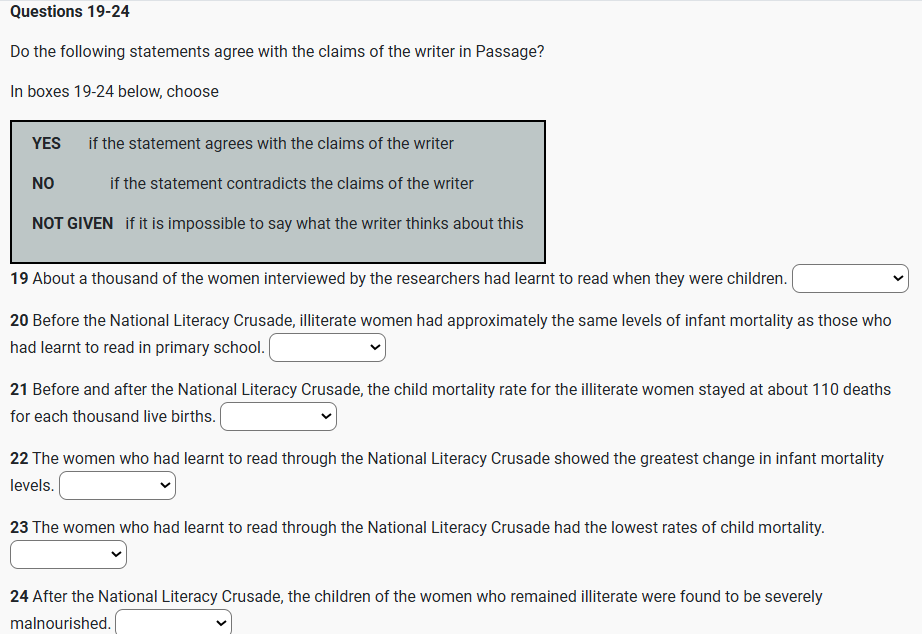
On 2nd August 1999, a particularly hot day in the town of Cirencester in the UK, a large pane of toughened glass in the roof of a shopping centre at Bishops Walk shattered without warning and fell from its frame.

When fragments were analysed by experts at the giant glass manufacturer Pilkington. which had made the pane, Q24 they found that minute crystals of nickel sulphide trapped inside the glass had almost certainly caused the failure.


Q14 The glass industry is aware of the issue,’ says Brian Waldron, chairman of the standards committee at tine Glass and Glazing Federation, a British trade association, and standards development officer at Pilkington. But he insists that cases are few and far between. ‘It’s a very rare phenomenon.’ he says.

Others disagree. ‘On average I see about one or two buildings a month suffering from nickel sulphide-related failures,’ says Barrie Josie, a consultant engineer involved in the Bishops Walk investigation. Other experts tell of similar experiences. Tony Wilmott of London-based consulting engineers Sandberg, and Simon Armstrong at CladTech Associates in Hampshire both say they know of hundreds of cases. ‘Q15 What you hear is only the tip of the iceberg.’ says Trevor Ford, a glass expert at Resolve Engineering in Brisbane. Queensland. He believes the reason is simple: ‘No one wants bad press.

Toughened glass is found everywhere, from cars and bus shelters to the windows, walls and roofs of thousands of buildings around the world. It’s easy to see why. Q18 This glass has five times the strength of standard glass, and when it does break it shatters into tiny cubes rather than large, razor-sharp shards. Architects love it because large panels can be bolted together to make transparent walls, and turning it into ceilings and floors is almost as easy.

Q20 It is made by heating a sheet of ordinary glass to about 620°C to soften it slightly, allowing its structure to expand, and then cooling it rapidly with jets of cold air. Q21 This causes the outer layer of the pane to contract and solidify before the interior. When the interior finally solidifies and shrinks, it exerts a pull on the outer layer that leaves It in permanent compression and produces a tensile force inside the glass. As cracks propagate best in materials under tension, the compressive force on the surface must be overcome before the pane will break, making it more resistant to cracking.

The problem starts when glass contains nickel sulphide impurities. Trace amounts of nickel and sulphur are usually present in the raw materials used to make glass, and nickel can also be introduced by fragments of nickel alloys falling into the molten glass. Q22 As the glass is heated, these atoms react to form tiny crystals of nickel sulphide. Just a tenth of a gram of nickel in the furnace can create up to 50,000 crystals.

These crystals can exist in two forms: a dense form called the alpha phase, which is stable at high temperatures, and a less dense form called the beta phase, which is stable at room temperatures. The high temperatures used in the toughening process convert all the crystals to the dense, compact alpha form. But the subsequent cooling is so rapid that the crystals don’t have time to change back to the beta phase. This leaves unstable alpha crystals in the glass, primed like a coiled spring, ready to revert to the beta phase without warning.

When this happens, the crystals expand by up to 4%. And if they are within the central, tensile region of the pane, Q19 the stresses this unleashes can shatter the whole sheet. The time that elapses before failure occurs is unpredictable. Q16 It could happen just months after manufacture, or decades later, although if the glass is heated – by sunlight, for example – the process is speeded up. Q23 Ironically, says Graham Dodd, of consulting engineers Arup in London, the oldest pane of toughened glass known to have failed due to nickel sulphide inclusions was in Pilkington’s glass research building in Lathom, Lancashire. The pane was 27 years old.

Q26 Data showing the scale of the nickel sulphide problem Is almost Impossible to find. The picture is made more complicated by the fact that these crystals occur in batches. So even if, on average, there is only one inclusion in 7 tonnes of glass, if you experience one nickel sulphide failure in your building, that probably means you’ve got a problem in more than one pane. Josie says that in the last decade, he has worked on over 15 buildings with the number of failures into double figures.

One of the worst examples of this is Waterfront Place, which was completed in 1990. Over the following decade, the 40-storey Brisbane block suffered a rash of failures. Eighty panes of its toughened glass shattered due to inclusions before experts were finally called in. Q17 John Barry, an expert in nickel sulphide contamination at the University of Queensland, analysed every glass pane in the building. Using a studio camera, a photographer went up in a cradle to take photos of every pane. These were scanned under a modified microfiche reader for signs of nickel sulphide crystals. ‘We discovered at least another 120 panes with potentially dangerous inclusions which were then replaced,’ says Barry. ‘It was a very expensive and time-consuming process that took around six months to complete.’

Though the project cost A$1.6 million (nearly £700,000), the alternative – re-cladding the entire building – would have cost ten times as much.


Learn From Experienced Teacher Best IELTS Coaching Dehradun Best IELTS in Dehradun Uttarakhand GMS Road BEST coaching in Dehradun Apply for Class Courses Today Good Results.

phone icon
8439000086
8439000087
7055710003
7055710004
IELTS Simulation 323 GMS Road, Near Ballupur Chowk, Dehradun, India
Chat on WhatsApp
email: info at ieltsband7.com

IELTS Reading-The Return of Artificial Intelligence S31AT3

 IELTS Reading The Return of Artificial Intelligence reading practice test has 10 questions belongs to 🤖 Technology & Computer Science subject..

It is becoming acceptable again to talk of computers performing human tasks such as problem-solving and pattern recognition.

IELTS reading sample 2

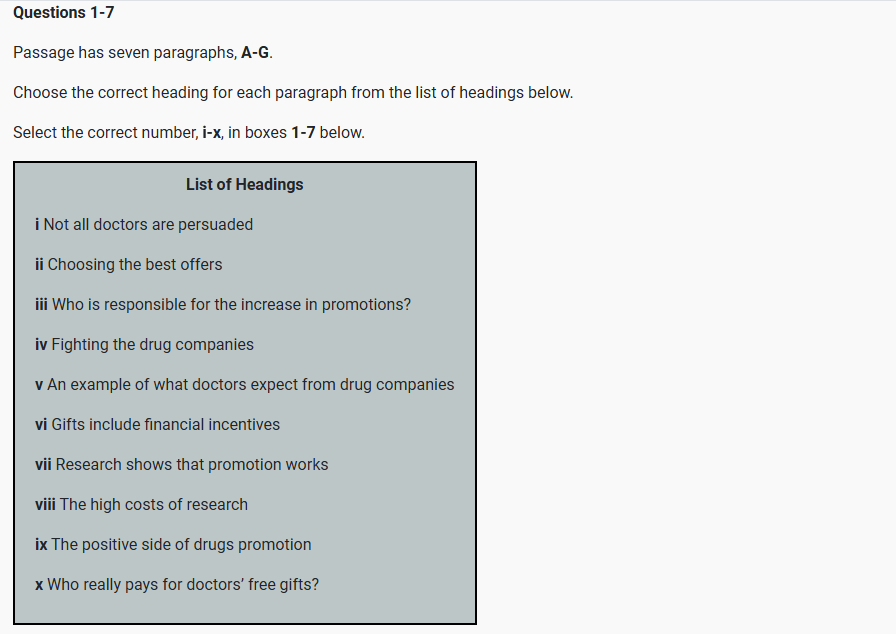
A. Q29 After years in the wilderness, the term ‘artificial intelligence’ (Al) seems poised to make a comeback. Al was big in the 1980s but vanished in the 1990s. It re-entered public consciousness with the release of Al, a movie about a robot boy. This has ignited public debate about Al, but the term is also being used once more within the computer industry. Researchers, executives, and marketing people are now using the expression without irony or inverted commas. And it is not always hype. The term is being applied, with some justification, to products that depend on technology that was originally developed by Al researchers. Admittedly, the rehabilitation of the term has a long way to go, and some firms still prefer to avoid using it. But the fact that others are starting to use it again suggests that Al has moved on from being seen as an over-ambitious and under-achieving field of research.

B. Q31 The field was launched, and the term ‘artificial intelligence’ coined, at a conference in 1956, by a group of researchers that included Marvin Minsky, John McCarthy, Herbert Simon, and Alan Newell, all of whom went on to become leading figures in the fieldQ28 The expression provided an attractive but informative name for a research programme that encompassed such previously disparate fields as operations research, cybernetics, logic, and computer science. The goal they shared was an attempt to capture or mimic human abilities using machines. That said, different groups of researchers attacked different problems, from speech recognition to chess playing, in different ways; Al unified the field in name only. But it was a term that captured the public imagination.

C. Q33 Most researchers agree that Al peaked around 1985. A public reared on science-fiction movies and excited by the growing power of computers had high expectations. For years, Al researchers had implied that a breakthrough was just around the corner. Q36 Marvin Minsky said in 1967 that within a generation the problem of creating ‘artificial intelligence’ would be substantially solved. Prototypes of medical-diagnosis programs and speech recognition software appeared to be making progress. Q36 It proved to be a false dawn. Thinking computers and household robots failed to materialise, and a backlash ensued. ‘Q38 There was undue optimism in the early 1980s,’ says David Leake, a researcher at Indiana University.Q39 Then when people realised these were hard problems, there was retrenchment. Q34 By the late 1980s, the term Al was being avoided by many researchers, who opted instead to align themselves with specific sub-disciplines such as neural networks, agent technology, case-based reasoning, and so on.’

D. Q35 Ironically, in some ways Al was a victim of its own success. Whenever an apparently mundane problem was solved, such as building a system that could land an aircraft unattended, the problem was deemed not to have been Al in the first place. ‘If it works, it can’t be Al,’ as Dr. Leake characterises it. The effect of repeatedly moving the goal-posts in this way was that Al came to refer to ‘blue-sky’ research that was still years away from commercialisation, Researchers joked that Al stood for ‘almost implemented’. Meanwhile, the technologies that made it once the market, such as speech recognition, language translation and decision-support software, were no longer regarded as Al. Yet all three once fell well within the umbrella of Al research.

E. But the tide may now be turning, according to Dr. Leake. HNC Software of San Diego, backed by a government agency, reckon chat their new approach to artificial intelligence is the most powerful and promising approach ever discovered. Q27 HNC claim that their system, based on a duster of 30 processors, could be used to spot camouflaged vehicles on a battlefield or extract a voice signal from a noisy background – tasks humans can do well, but computers cannot. ‘Whether or not their technology lives up to the claims made for it, the fact that HNC are emphasising the use of Al is itself an interesting development,’ says Dr. Leake.

F. Q30&40 Another factor that may boost the prospects for Al in the near future is that investors are now looking for firms using clever technology, rather than just a clever business model, to differentiate themselves. In particular, the problem of information overload, exacerbated by the growth of e-mail and the explosion in the number of web pages, means there are plenty of opportunities for new technologies to help filter and categorise information – classic Al problems. That may mean that more artificial intelligence companies will start to emerge to meet this challenge.

G. Q37 The 1969 film, 2001:A Space Odyssey, featured an intelligent computer called HAL 9000. As well as understanding and speaking English, HAL could play chess and even learned to lipread. HAL thus encapsulated the optimism of the 1960s that intelligent computers would be widespread by 2001. But 2001 has been and gone, and there is still no sign of a HAL-like computer. Individual systems can play chess or transcribe speech, but a general theory of machine intelligence still remains elusive. It may be. however, that the comparison with HAL no longer seems quite so Important, and Al can now be judged by what it can do, rather than by how well it matches up to a 30-year-old science-fiction film. ‘People are beginning to realise that there are impressive things that these systems can do.’ says Dr Leake hopefully.


Boost Your Score: Practice IELTS Online with IELTS Simulator.

phone icon
8439000086
8439000087
7055710003
7055710004
IELTS Simulation 323 GMS Road, Near Ballupur Chowk, Dehradun, India
Chat on WhatsApp
email: info at ieltsband7.com