IELTS READING – Disappearing Delta S31AT2

IELTS Reading Disappearing Delta reading practice test has 10 questions belongs to šŸŒ Environment & Geography subjects..

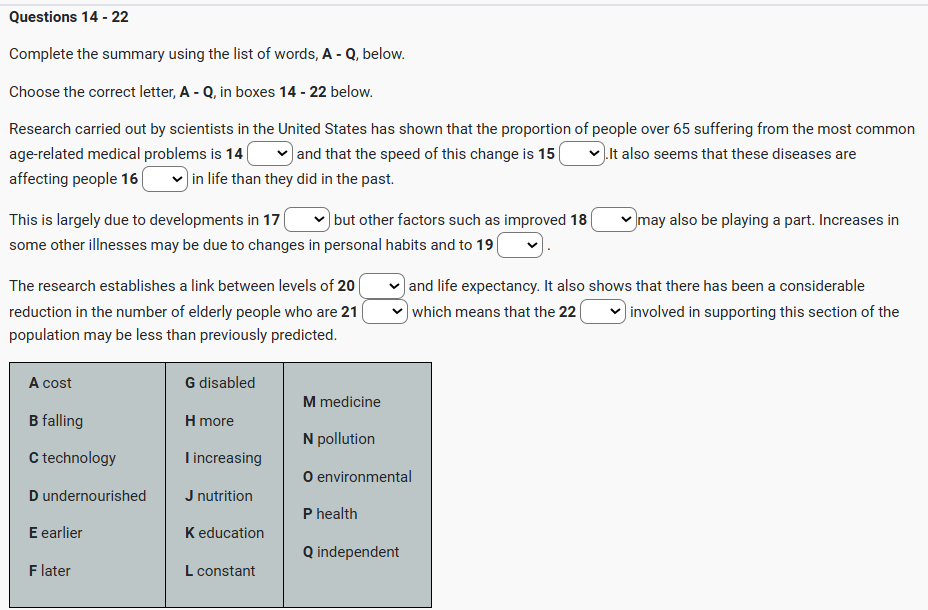
A. The fertile land of the Nile delta is being eroded along Egypt’s Mediterranean coast at an astounding rate, in some parts estimated at 100 metres per year.Ā Q18Ā In the past, land scoured away from the coastline by the currents of the Mediterranean Sea used to be replaced by sediment brought down to the delta by the River Mile, but this is no longer happening.

B. Q14&19Ā Up to now, people have blamed this loss of delta land on the two large dams at Aswan in the south of Egypt, which hold back virtually all of the sediment that used to flow down the river. Before the dams were built, the Nile flowed freely, carrying huge quantities of sediment north from Africa’s interior to be deposited on the Nile delta. This continued for 7,000 years, eventually covering a region of over 22,000 square kilometres with layers of fertile silt. Annual flooding brought in new, nutrient-rich soil to the delta region, replacing what had been washed away by the sea, and dispensing with the need for fertilizers in Egypt’s richest food-growing area But whenĀ Q20 the Aswan dams were constructed in the 20th century to provide electricity and irrigation, and to protect the huge population centre of Cairo and its surrounding areas from annual flooding and drought, most of the sediment with its natural fertilizer accumulated up above the dam in the southern, upstream half of Lake Nasser, instead of passing down to the delta.

C.Ā Now, however, there turns out to be more to the story It appears that the sediment-free water emerging from the Aswan dams picks up silt and land as it erodes the river bed and banks on the 800-kilometre trip to Cairo. Daniel Jean Stanley of the Smithsonian Institute noticed that water samples taken in Cairo, just before the river enters the delta, indicated that the river sometimes carries more than 850 grams of sediment per cubic metre of water – almost half of what it carried before the dams were built.

ā€˜I’m ashamed to say that the significance of this didn’t strike me until after I had read 50 or 60 studies,’ says Stanley in Marine Geology. ā€˜Q21 There is still a lot of sediment coming into the delta, but virtually no sediment comes out into the Mediterranean to replenish the coastline.

So this sediment must be trapped on the delta itself.’

D. Q15Ā Once north of Cairo, most of the Nile water is diverted into more than 10,000 kilometres of irrigation canals and only o small proportion reaches the sea directly through the rivers in the delta. The water in the irrigation canals is still or very slow-moving and thus cannot carry sediment, Stanley explains.Ā Q23 The sediment sinks to the bottom of the canals and then is added to fields by farmers or pumped with the water into the four large freshwater lagoons that are located near the outer edges of the delta. So very little of it actually reaches the coastline to replace what is being washed away by the Mediterranean currents.

E. The farms on the delta plains and fishing and aquaculture in the lagoons account for much of Egypt’s food supply. ButĀ Q16&24 by the time the sediment has come to rest in the fields and lagoons it is laden with municipal, industrial, and agricultural waste from the Cairo region, which is home to more than 40 million people. ā€˜Pollutants are building up faster and faster,’ says Stanley.

Based on his investigations of sediment from the delta lagoons, Frederic Siegel of George Washington University concurs. ā€˜In Manzalah Lagoon, for example, the increase in mercury, lead, copper, and zinc coincided with the building of the High Dam at Aswan, the availability of cheap electricity, and the development of major power-based industries/ he says. Since that time the concentration of mercury has increased significantly. Lead from engines that use leaded fuels and from other industrial sources has also increased dramatically. These poisons can easily enter the food chain, affecting the productivity of fishing and farming. Another problem is that agricultural wastes include fertilizers which stimulate increases in plant growth in the lagoons and upset the ecology of the area, with serious effects on the fishing industry.

F. According to Siegel, international environmental organisations are beginning to pay closer attention to the region, partly because of the problems of erosion and pollution of the Nile delta, but principally because they fear the impact this situation could have on the whole Mediterranean coastal ecosystem. But there are no easy solutions.Ā Q25&26 In the immediate future, Stanley believes that one solution would be to make artificial floods to flush out the delta waterways, in the same way that natural floods did before the construction of the dams.Ā Q17&25&26Ā He says, however, that in the long term an alternative process such as desalination may have to be used to increase the amount of water available. ā€˜In my view, Egypt must devise a way to have more water running through the river and the delta/ says Stanley. Easier said than done in a desert region with a rapidly growing population.


Easily Get Required Score I am interested in IELTS Pass with Confidence, Dehradun Small Batch Size with Flexible Time, professional faculty.

phone icon
8439000086
8439000087
7055710003
7055710004
IELTS Simulation 323 GMS Road, Near Ballupur Chowk, Dehradun, India
Chat on WhatsApp
email: info at ieltsband7.com

IELTS READING – Early Childhood Education S31AT1

Ā IELTS Reading Early Childhood Education reading practice test has 10 questions belongs to šŸŽ“ Education & Child Development subject..

New Zealand’s National Party spokesman on education, Dr Lockwood Smith, recently visited the US and Britain. Here he reports on the findings of his trip and what they could mean for New Zealand’s education policy

A. ’Education To Be More’ was published last August. It was the report of the New Zealand Government’s Early Childhood Care and Education Working Group. The report argued for enhanced equity of access and better funding for childcare and early childhood education institutions. Unquestionably, that’s a real need; but since parents don’t normally send children to pre-schools until the age of three, are we missing out on the most important years of all?

B.Ā A 13 year study of early childhood development at Harvard University has shown that, by the age of three, most children have the potential to understand about 1000 words – most of the language they will use in ordinary conversation for the rest of their lives.

Furthermore,Ā Q2 research has shown that while every child is born with a natural curiosity, if can be suppressed dramatically during the second and third years of life. Researchers claim that the human personality is formed during the first two years of life, and during the first three years children learn the basic skills they will use in all their later learning both at home and at school. Once over the age of three, children continue to expand on existing knowledge of the world.

C. It is generally acknowledged that young people from poorer socio-economic backgrounds fend to do less well in our education system. That’s observed not just in New Zealand, but also in Australia, Britain and America.Ā Q10 In an attempt to overcome that educational under-achievement, a nationwide programme called ā€˜Headstart’ was launched in the United States in 1965.Ā Q9 A lot of money was poured into it. It took children into pre-school institutions at the age of three and was supposed to help the children of poorer families succeed in school.

Q7Ā Despite substantial funding,Ā Q3 results have been disappointing. It is thought that there are two explanations for this. First, the programme began too late. Many children who entered it at the age of three were already behind their peers in language and measurable intelligence. Second, the parents were not involved. At the end of each day, ā€˜ā€˜Ā Q6 children returned to the same disadvantaged home environment.

D. As a result of the growing research evidence of the importance of the first three years of a child’s life and the disappointing results from ā€˜Headstart’, a pilot programme was launched in Missouri in the US that focused on parents as the child’s first teachers. The ā€˜Missouri’ programme was predicated on research showing that working with the family, rather than bypassing the parents, is the most effective way of helping children get off to the best possible start in life.Ā Q1Ā The four-year pilot study included 380 families who were about to have their first child and who represented a cross-section of socio-economic status, age and family configurations.Ā Q5 They included single-parent and two-parent families, families in which both parents worked, and families with either the mother or father at home.

Q8Ā The programme involved trained parent-educators visiting the parents’ home and working with tire parent, or parents, and the child. Information on child development, and guidance on things to look for and expect as the child grows were provided, plus guidance in fostering the child’s intellectual, language, social and motor-skill development. Periodic check-ups of the child’s educational and sensory development (hearing and vision) were made to detect possible handicaps that interfere with growth and development. Medical problems were referred to professionals.

Parent educators made personal visits to homes and monthly group meetings were held with other new parents to share experience and discuss topics of interest. Parent resource centres, located in school buildings, offered learning materials for families and facilitators for child core.

E. At the age of three, the children who had been involved in the ā€˜Missouri’ programme were evaluated alongside a cross-section of children selected from the same range of socio-economic backgrounds and family situations, and also a random sample of children that age.Ā Q4 The results were phenomenal. By the age of three, the children in the programme were significantly more advanced in language development than their peers, had made greater strides in problem-solving and other intellectual skills, and were further along in social development, in fact, Q11Ā the average child on the programme was performing at the level of the top 15 to 20 per cent of their peers in such things as auditory comprehension, verbal ability and language ability.

Most important of all, the traditional measures of ā€˜risk’, such as parents’ age and education, or whether they were a single parent, bore little or no relationship to the measures of achievement and language development.Ā Q12 Children in the programme performed equally well regardless of socio-economic disadvantages. Child abuse was virtually eliminated. The one factor that was found to affect the child’s development was family stress leading to a poor quality of parent-child interaction. That interaction was not necessarily bad in poorer families.

F. These research findings are exciting. There is growing evidence in New Zealand that children from poorer socio-economic backgrounds are arriving at school less well-developed and that our school system tends to perpetuate that disadvantage. The initiative outlined above could break that cycle of disadvantage. The concept of working with parents in their homes, or at their place of work, contrasts quite markedly with the report of the Early Childhood Care and Education Working Group. Their focus is on getting children and mothers access to childcare and institutionalised early childhood education. Education from the age of three to five is undoubtedly vital, but without a similar focus on parent education and on the vital importance of the first three years, some evidence indicates that it will not be enough to overcome educational inequity.


Prepare for IELTS IELTS Test International Experienced Teacher Best Training By CELTA Trainer.

phone icon
8439000086
8439000087
7055710003
7055710004
IELTS Simulation 323 GMS Road, Near Ballupur Chowk, Dehradun, India
Chat on WhatsApp
email: info at ieltsband7.com

IELTS READING – The Impact of Wilderness Tourism S32AT1

Ā IELTS Reading The Impact of Wilderness Tourism reading practice test has 10 questions belongs to šŸžļø Environment & Tourism subject..

A. The market for tourism In remote areas is booming as never before. Countries ail across the world are actively promoting their ā€˜wilderness’ regions – such as mountains, Arctic lands, deserts, small islands and wetlands – to high-spending tourists.Ā Q4Ā The attraction of these areas is obvious.- by definition, wilderness tourism requires little or no initial investment. But that does not mean that there is no cost. As the 1992 United Nations Conference on Environment and Development recognized,Ā Q1 these regions are fragile (i.e. highly vulnerable to abnormal pressures) not just in terms of their ecology, but also in terms of the culture of their inhabitants.Ā Q5 The three most significant types of fragile environment in these respects, and also in terms of the proportion of the Earth’s surface they cover, are deserts, mountains, and Arctic areas. An important characteristic is their marked seasonality, with harsh conditions prevailing for many months each year. Consequently,Ā Q6 most human activities, including tourism, are limited to quite clearly defined parts of the year.

Tourists are drawn to these regions by their natural landscape beauty and the unique cultures of their indigenous people. And poor governments in these isolated areas have welcomed the new breed of ā€˜adventure tourist’, grateful for the hard currency they bring. For several years now, tourism has been the prime source of foreign exchange in Nepal and Bhutan. Tourism is also a key element in the economies of Arctic zones such as Lapland and Alaska and in desert areas such as Ayers Rock in Australia and Arizona’s Monument Valley.

B. Once a location is established as a main tourist destination,Ā Q2Ā the effects on the local community are profound. When hill-farmers, for example, can make more money in a few weeks working as porters for foreign trekkers than they can in a year working in their fields, it is not surprising that many of them give up their farm-work, which is thus left to other members of the family.Ā Q7 In some hill-regions, this has led to a serious decline in farm output and a change in the local diet, because there is insufficient labour to maintain terraces and irrigation systems and tend to crops. The result has been that many people in these regions have turned to outside supplies of rice and other foods.

Q8Ā In Arctic and desert societies, year-round survival has traditionally depended on hunting animals and fish and collecting fruit over a relatively short season. However, as some inhabitants become Involved in tourism, they no longer have time to collect wild food; this has led to increasing dependence on bought food and stores. Tourism is not always the culprit behind such changes. All kinds of wage labour, or government handouts, tend to undermine traditional survival systems. Whatever the cause, the dilemma is always the same: what happens If these new, external sources of income dry up?

The physical impact of visitors is another serious problem associated with the growth In adventure tourism. Much attention has focused on erosion along major trails, but perhaps more important are the deforestation and impacts on water supplies arising from the need to provide tourists with cooked food and hot showers. In both mountains and deserts, slow-growing trees are often the main sources of fuel and water supplies may be limited or vulnerable to degradation through heavy use.

C.Ā Stories about the problems of tourism have become legion in the last few years. Yet it does not have to be a problem. Although tourism inevitably affects the region in which it takes place, the costs to these fragile environments and their local cultures can be minimized. Indeed, it can even be a vehicle for reinvigorating local cultures, as has happened with the Sherpas of Nepal’s Khumbu Valley and in some Alpine villages. And a growing number of adventure tourism operators are trying to ensure that their activities benefit the local population and environment over the long term.

In the Swiss Alps, communities have decided that their future depends on integrating tourism more effectively with the local economy. Local concern about the rising number of second home developments in the Swiss Pays d’Enhaut resulted in limits being imposed on their growth. There has also been a renaissance in communalĀ Q10 cheese production. In the area, providing the locals with a reliable source of income that does not depend on outside visitors.

Many of the Arctic tourist destinations have been exploited by outside companies, who employ transient workers and repatriate most of the profits to their home base. But some Arctic communities are now operatingĀ Q11 tour businesses themselves, thereby ensuring that the benefits accrue locally. For instance, a native corporation in Alaska, employing local people. Is running an air tour from Anchorage to Kotzebue, where tourists eat Arctic food, walk on the tundra and watch local musicians and dancers.

Native people In the desert regions of the American Southwest have followed similar strategies, encouraging tourists to visit their pueblos and reservations to purchase high-quality handicrafts and artwork. The Acoma and San lldefonso pueblos have established highly profitableĀ Q12 pottery businesses, while the Navajo and Hopi groups have been similarly successful withĀ Q13 jewellery.

Too many people living in fragile environments have lost control over their economies, their culture, and their environment when tourism has penetrated their homelands. Merely restricting tourism cannot be the solution to the imbalance, because people’s desire to see new places will not just disappear.Ā Q3 Instead, communities in fragile environments must achieve greater control over tourism ventures in their regions, in order to balance their needs and aspirations with the demands of tourism. A growing number of communities are demonstrating that, with firm communal decision-making, this is possible. The critical question now is whether this can become the norm, rather than the exception


Boost Your Score: Practice IELTS Online with IELTS Simulator.

phone icon
8439000086
8439000087
7055710003
7055710004
IELTS Simulation 323 GMS Road, Near Ballupur Chowk, Dehradun, India

Chat on WhatsApp
email: info at ieltsband7.com

IELTS READING – The Birth of Scientific English S30AT3

IELTS Reading The Birth of Scientific English reading practice test has 10 questions belongs to Language & Linguistics subjects..

World science is dominated today by a small number of languages, including Japanese, German, and French, but it is English which is probably the most popular global language of science. This is not just because of the importance of English- speaking countries such as the USA in scientific research; the scientists of many non-English-speaking countries find that they need to write their research papers in English to reach a wide international audience. Given the prominence of scientific English today, it may seem surprising that no one really knew how to write science in English before the 17th century. Before that,Ā Q28 Latin was regarded as the lingua franca1 for European intellectuals.

The European Renaissance (c. 14th-16th century) is sometimes called the ā€˜revival of learning’, a time of renewed interest in the ā€˜lost knowledge’ of classical times. At the same time, however, scholars also began to test and extend this knowledge. The emergent nation-states of Europe developed competitive interests in world exploration and the development of trade. Such expansion, which was to take the English language west to America and east to India, was supported by scientific developments such as the discovery of magnetism (and hence the invention of the compass), improvements in cartography, and –Ā Q36 perhaps the most important scientific revolution of them all – the new theories of astronomy and the movement of the Earth in relation to the planets and stars, developed by Copernicus (1473-1543).

England was one of the first countries where scientists adopted and publicised Copernican ideas with enthusiasm. Some of these scholars, including two with interests in language – John Wallis and John Wilkins – helped found the Royal Society in 1660 in order to promote empirical scientific research.

Across Europe similar academies and societies arose, creating new national traditions of science. In the initial stages of the scientific revolution, most publications in the national languages wereĀ Q38 popular works, encyclopaedias, educational textbooks, and translations. Original science was not done in English until the second half of the 17th century. For example, Newton published his mathematical treatise, known asĀ Q39Ā the Principia, in Latin, but published his later work on the properties of light – Opticks – in English.

There were several reasons why original science continued to be written in Latin. The first was simply a matter of audience. Latin was suitable for an international audience of scholars, whereas English reached a socially wider, butĀ Q40 more local audience. Hence, popular science was written in English.

A second reason for writing in Latin’ may, perversely, have been a concern for secrecy. Open publication had dangers in putting into the public domain preliminary ideas which had not yet been fully exploited by their ā€˜author’. This growing concern about intellectual property rights was a feature of the period – it reflected both the humanist notion of the individual, rational scientist who invents and discovers through private intellectual labour, and the growing connection between original science and commercial exploitation. There was something of a social distinction between ā€˜scholars and gentlemen’ who understood Latin, and men of trade who lacked a classical education. And in the mid-17th century, it was common practice for mathematicians to keep their discoveries and proofs secret, by writing them in cipher, in obscure languages, or in private messages deposited in a sealed box with the Royal Society. Some scientists might have felt more comfortable with Latin precisely because its audience, though international, was socially restricted.Ā Q29 Doctors clung the most keenly to Latin as an ā€˜insider language’.

A third reason why the writing of original science in English was delayed may have been to do with the linguistic inadequacy of English in the early modern period. English was not well equipped to deal with scientific argument. First, it lacked the necessaryĀ Q30 technical vocabulary. Second, it lacked theĀ Q31 grammatical resources required to represent the world in an objective and impersonal way, and to discuss the relations, such as cause and effect, that might hold between complex and hypothetical entities.

Fortunately, several members of theĀ Q32 Royal Society possessed an interest in language and became engaged in various linguistic projects. Although a proposal in 1664 to establish a committee for improving the English language came to little, the society’s members did a great deal to foster the publication of science in English and to encourage the development of a suitable writing style. Many members of the Royal Society also published monographs in English. One of the first was by Robert Hooke, the society’s first curator of experiments, who described his experiments with microscopes in Micrographia (1665). This work is largely narrative in style, based on a transcript of oral demonstrations and lectures.

In 1665 a new scientific journal. Philosophical Transactions, was inaugurated. Perhaps the first international English-language scientific journal,Ā Q37 it encouraged a new genre of scientific writing, that of short, focused accounts of particular experiments.

The 17th century was thus a formative period in the establishment of scientific English. In the following century much of this momentum was lost asĀ Q33 German established itself as the leading European language of science. It is estimated that by the end of the 18th century, 401 German scientific journals had been established as opposed to 96 in France and 50 in England. However, in the 19th century scientific English again enjoyed substantial lexical growth as theĀ Q34 industrial revolution created the need for new technical vocabulary, and new, specialised, professional societies were instituted to promote and publish in the new disciplines.


Best Results Easily Get Required Score IELTS Exam Dates Available, Small Batch Size with Flexible Time, Professional.

phone icon
8439000086
8439000087
7055710003
7055710004
IELTS Simulation 323 GMS Road, Near Ballupur Chowk, Dehradun, India
Chat on WhatsApp
email: info at ieltsband7.com