IELTS READING – Alternative Medicine in Australia S26AT2

IELTS SIMULATOR ACADEMIC READING – Alternative Medicine in Australia S26AT2 FREE COMPUTER DELIVERED ONLINE IELTS SIMULATION
IELTS Reading Alternative Medicine in Australia reading practice test has 10 questions belongs to 🌿 Health & Society subject..

The first students to study alternative medicine at university level in Australia began their four-year, full-time course at the University of Technology, Sydney, in early 1994. Their course covered, among other therapies, acupuncture. The theory they learnt is based on the traditional Chinese explanation of this ancient healing art: that it can regulate the flow of ‘Qi’ or energy through pathways in the body. This course reflects how far some alternative therapies have come in their struggle for acceptance by the medical establishment.

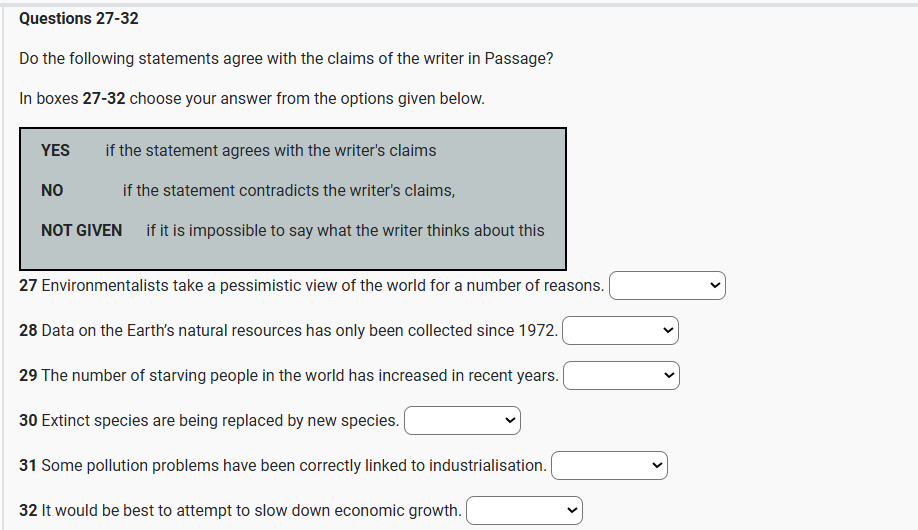
Q14 Australia has been unusual in the Western world in having a very conservative attitude to natural or alternative therapies, according to Dr. Paul Laver, a lecturer in Public Health at the University of Sydney. ‘We’ve had a tradition of doctors being fairly powerful and I guess they are pretty loath to allow any pretenders to their position to come into it.’ In many other industrialized countries, orthodox and alternative medicines have worked ‘hand in glove’ for years. In Europe, only orthodox doctors can prescribe herbal medicine. In Germany, plant remedies account for 10% of the national turnover of pharmaceutical. Q15 Americans made more visits to alternative therapist than to orthodox doctors in 1990, and each year they spend about $US 12 billion on the therapies that have not been scientifically tested.

Q16 Disenchantment with orthodox medicine has seen the popularity of alternative therapies in Australia climb steadily during the past 20 yearsQ17 In a 1983 national health survey, 1.9% of people said they had contacted a chiropractor, naturopath, osteopath, acupuncturist or herbalist in the two weeks prior to the survey. By 1990, this figure had risen to 2.6% of the populationQ18 The 550,000 consultations with alternative therapists reported in the 1990 survey represented about an eighth of the total number of consultations with medically qualified personnel covered by the survey, according to Dr. Laver and colleagues writing in the Australian Journal of Public Health in 1993. Q19A better educated and less accepting public has become disillusion with the experts in general and increasingly skeptical about science and empirically based knowledge,’ they said. ‘The high standing of professionals, including doctors, has been eroded as a consequence.’

Q20 Rather than resisting or criticizing this trend, increasing numbers of Australian doctors, particularly younger ones, are forming group practices with alternative therapists or taking courses themselves, particularly in acupuncture and herbalismQ21 Part of the incentive was financial, Dr. Laver said. ‘The bottom line is that most general practitioners are business people. If they see potential clientele going elsewhere, they might want to be able to offer a similar service.’

Q22 In 1993, Dr Laver and his colleagues published a survey of 289 Sydney people who attended eight alternative therapists’ practices in Sydney. These practices offered a wide range of alternative therapies from 25 therapistsQ23 Those surveyed had experience chronic illnesses, for which orthodox medicine had been able to provide little relief. They commented that they liked the holistic approach of their alternative therapists and the friendly, concerned, and detailed attention they had received. The cold, impersonal manner of orthodox doctors featured in the survey. An increasing exodus from their clinics, coupled with this and a number of other relevant surveys carried out in Australia, all pointing to orthodox doctors’ inadequacies, have led mainstream doctors themselves to begin to admit they could learn from the personal style of alternative therapists. Dr. Patrick Store, President of the Royal College of General Practitioners, concurs that orthodox doctors could learn a lot about beside manner and advising patients on preventative health from alternative therapists.

According to the Australian Journal of Public Health, 18% of patients visiting alternative therapists do so because they suffer from musculo-skeletal complaints; 12% suffer from digestive problems, which is only 1% more than those suffering from Q24 emotional problems. Those suffering from respiratory complaints represent 7% of their patients, and candida sufferers represent an equal percentage. Q25 Headache sufferers and those complaining of Q26 general ill health represent 6% and 5% of patients respectively, and a further 4% see therapists for general health maintenance.

The survey suggested that complementary medicine is probably a better term than alternative medicine. Alternative medicine appears to be an adjunct, sought in times of disenchantment when conventional medicine seems not to offer the answer.


 Prepare for IELTS IELTS Test International Experienced Teacher Best Training By CELTA Trainer. Best Results Easily Get Required Score IELTS Exam Dates Available, Small Batch Size with Flexible Time, Professional.

phone icon
8439000086
8439000087
7055710003
7055710004
IELTS Simulation 323 GMS Road, Near Ballupur Chowk, Dehradun, India
Chat on WhatsApp
email: info at ieltsband7.com

IELTS READING – Lost for words S26AT1

IELTS SIMULATOR ACADEMIC READING – Lost for words S26AT1 FREE COMPUTER DELIVERED ONLINE IELTS SIMULATION
IELTS Reading Lost for words reading practice test has 10 questions belongs to 🗣️ Language & Linguistics subject..

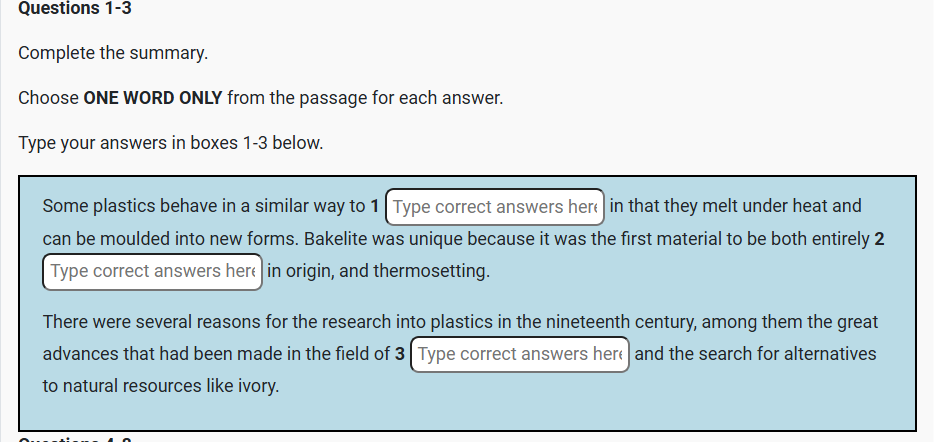
In the Native American Navajo nation, which sprawls across four states in the American south-west, the native language is dying. Most of its speakers are middle-aged or elderly Although many students take classes in Navajo, the schools are run in English. Street signs, supermarket goods, and even their own newspaper are all in English. Not surprisingly, linguists doubt that any native speakers of Navajo will remain in a hundred years’ time.

Navajo is far from alone. Half the world’s 6,800 languages are likely to vanish within two generations – that’s one language lost every ten days. Never before has the planet’s linguistic diversity shrunk at such a pace. At the moment, we are heading for about three or four languages dominating the world,’ says Mark Pagel, an evolutionary biologist at the University of Reading. ‘It’s a mass extinction, and whether we will ever rebound from the loss is difficult to know.’

Q1 Isolation breeds linguistic diversity: as a result, the world is peppered with languages spoken by only a few people. Only 250 languages have more than a million speakers, and at least 3,000 have fewer than 2,500. It is not necessarily these small languages that are about to disappear. Navajo is considered endangered despite having 150,000 speakers. Q10 What makes a language endangered is not just the number of speakers, but how old they are. Q11 If it is spoken by children it is relatively safe. The critically endangered languages are those that are only spoken by the elderly, according to Michael Krauss, director of the Alassk Native Language Center, in Fairbanks.

Why do people reject the language of their parents? It begins with a crisis of confidence, when a small community finds itself alongside a larger, wealthier society, says Nicholas Ostler, of Britain’s Foundation for Endangered Languages, in Bath. Q8People lose faith in their culture,’ he says. ‘When the next generation reaches their teens, they might not want to be induced into the old traditions.’

The change is not always voluntary. Quite often, governments try to kill off a minority language by banning its use in public or discouraging its use in schools, all to promote national unity. 

 The former US policy of running Indian reservation schools in English, for example, effectively put languages such as Navajo on the danger list. But Salikoko Mufwene, who chairs the Linguistics department at the University of Chicago, argues that the deadliest weapon is not government policy but Q2 economic globalisation. ‘Native Americans have not lost pride in their language, but they have had to adapt to socio-economic pressures,’ he says. ‘They cannot refuse to speak English if most commercial activity is in English.’ But are languages worth saving? At the very least, there is a loss of data for the study of languages and their evolution, which relies on comparisons between languages, both living and dead. When an unwritten and unrecorded language disappears, it is lost to science.

Q9 Language is also intimately bound up with culture, so it may be difficult to preserve one without the other. ‘If a person shifts from Navajo to English, they lose something,’ Mufwene says. ‘Moreover, Q7 the loss of diversity may also deprive us of different ways of looking at the world,’ says Pagel. There is mounting evidence that learning a language produces physiological changes in the brain. ‘Your brain and mine are different from the brain of someone who speaks French, for instance,’ Pagel says, and this could affect our thoughts and perceptions. ‘The patterns and connections we make among various concepts may be structured by the linguistic habits of our community.’

Q13 So despite linguists’ best efforts, many languages will disappear over the next century. But a growing interest in Q3 cultural identity may prevent the direst predictions from coming true. ‘The key to fostering diversity is for people to learn their ancestral tongue, as well as the dominant language,’ says Doug Whalen, founder and president of the Endangered Language Fund in New Haven, Connecticut. Q5Most of these languages will not survive without a large degree of bilingualism,’ he says. In New Zealand, classes for children have slowed the erosion of Maori and rekindled interest in the language. A similar approach in Hawaii has produced about 8,000 new speakers of Polynesian languages in the past few years. In California, ‘apprentice’ programmes have provided life support to several indigenous languages. Volunteer ‘apprentices’ pair up with one of the last living speakers of a Native American tongue to learn a Q4 traditional skill such as basket weaving, with instruction exclusively in the endangered language. After about 300 hours of training they are generally sufficiently fluent to transmit the language to the next generation. But Q6 says that preventing a language dying out is not the same as giving it new life by using it every day. ‘Preserving a language is more like preserving fruits in a jar,’ he says.

However, preservation can bring a language back from the dead. There are examples of languages that have survived in written form and then been revived by later generations. But a written form is essential for this, so the mere possibility of revival has led many speakers of endangered languages to develop systems of writing where none existed before.


Learn From Experienced Teacher Best IELTS Coaching Dehradun Best IELTS in Dehradun Uttarakhand GMS Road BEST coaching in Dehradun Apply for Class Courses Today Good Results.

phone icon
8439000086
8439000087
7055710003
7055710004
IELTS Simulation 323 GMS Road, Near Ballupur Chowk, Dehradun, India
Chat on WhatsApp
email: info at ieltsband7.com

IELTS READING – VISUAL SYMBOLS AND THE BLIND S25AT3

 IELTS Reading Visual Symbols and the Blind reading practice test has 10 questions belongs to👁️‍🗨️ Psychology & Disability Studies subject..

Part 1

Q27 From a number of recent studies it has become clear that blind people can appreciate the use of outlines and perspectives to describe the arrangement of objects and other surfaces in space.

IELTS reading sample 2

But pictures are more than literal representations. Q28 This fact was drawn to my attention dramatically when a blind woman in one of my investigations decided on her own initiative to draw a wheel as it was spinning. To show this motion’ she traced a curve inside the circle(Fig. 1). I was taken aback’ lines of motion’ such as the one she used’ are a very recent invention in the history of illustration. Indeed’ as art scholar David Kunzle notes’ Wilhelm Busch’ a trend-setting nineteenth-century cartoonist’ used virtually no motion lines in his popular figure until about 1877.


When I asked several other blind study subjects to draw a spinning wheel’ one particularly clever rendition appeared repeatedly: several subjects showed the wheel’s spokes as curves lines. When asked about these curves’ they all described them as metaphorical ways of suggesting motion. Majority rule would argue that this device somehow indicated motion very well. But was it a better indicator than’ say’ broken or wavy lines or any other kind of line’ for that matter? The answer was not clear. So I decided to test whether various lines of motion were apt ways of showing movement or if they were merely idiosyncratic marks. Moreover’ I wanted to discover whether there were differences in how the blind and the sighted interpreted lines of motion.

To search out these answers’ I created raised-line drawings of five different wheels’ depicting spokes with lines that curved’ bent’ waved’ dashed and extended beyond the perimeters of the wheel. I then asked eighteen blind volunteers to feel the wheels and assign one of the following motions to each wheel: wobbling’ spinning fast’ spinning steadily’ jerking or braking. My control group consisted of eighteen sighted undergraduates from the University of Toronto.

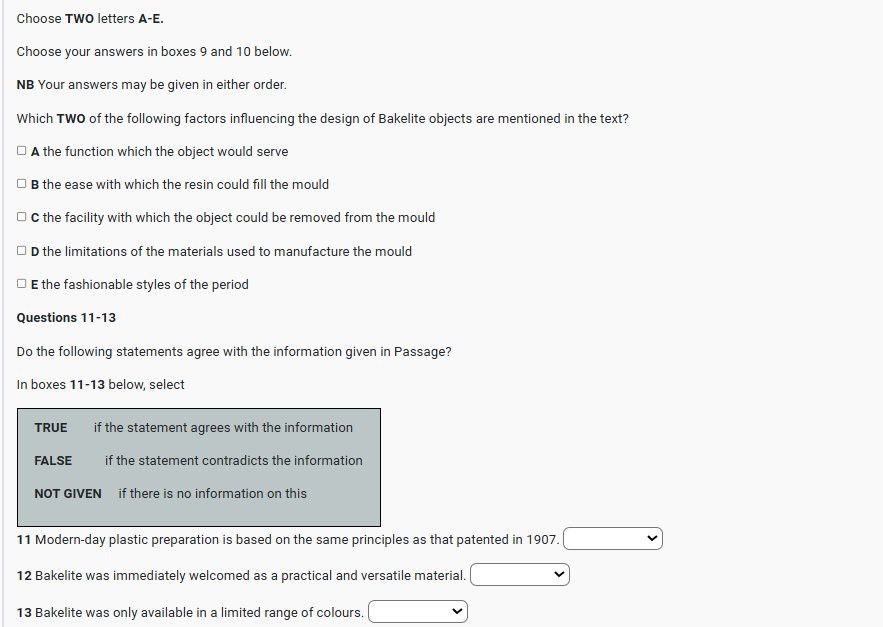
All but one of the blind subjects assigned distinctive motions to each wheel. Q32 Most guessed that the curved spokes indicated that the wheel was spinning steadily; the wavy spokes’ they thought; suggested that the wheel was wobbling’ and the bent spokes were taken as a sign that the wheel was jerking. Q30 Subjects assumed that spokes extending beyond the wheel’s perimeter signified that the wheel had its brakes on and that Q31 dashed spokes indicated the wheel was spinning quickly.

In addition’ the favoured description for the sighted was favoured description for the blind in every instance. What is more’ the consensus among the sighted was barely higher than that among the blind. Because motion devices are unfamiliar to the blind’ Q29 the task I gave them involved some problem solving. Evidently’ however’ the blind not only figured out the meaning for each of the motion’ but as a group they generally came up with the same meaning at least as frequently as did sighted subjects.

Part 2

We have found that the blind understand other kinds of visual metaphors as well. One blind woman drew a picture of a child inside a heart-choosing that symbol’ she said’ to show that love surrounded the child. With Chang Hong Liu’ a doctoral student from china’ I have begun exploring how well blind people understand the symbolism behind shapes such as hearts that do not directly represent their meaning.

We gave a list of twenty Q33 pairs of words to Q35&36 sighted subjects and asked them to pick from each pair the term that best related to a circle and the term that best related to a Q34 square. For example’ we asked: what goes with soft? A circle or a square? Which shape goes with hard?

All our subjects deemed the circle soft and the square hard. A full 94% ascribed happy to the circle’ instead of sad. But other pairs revealed less agreement: 79% matched fast to slow and weak to strong’ respectively. And only 51% linked Q37 deep to circle and shallow to square. (see Fig. 2) When we tested four totally Q38 blind volunteers using the same list’ Q39 we found that their choices closely resembled those made by the sighted subjects. One man’ who had been blind since birth’ scored extremely well. He made only one match differing from the consensus’ assigning ‘far’ to square and ‘near’ to circle. In fact’ only a small majority of sighted subjects’ 53%’ had paired far and near to the opposite partners.

 Q40 Thus we concluded that the blind interprets abstract shapes as sighted people do.

Words associated with circle/square Agreement among subjects(%)
SOFT-HARD 100
MOTHER-FATHER 94
HAPPY-SAD 94
GOOD-EVIL 89
LOVE-HATE 89
ALIVE-DEAD 87
BRIGHT-DARK 87
LIGHT-HEAVY 85
WARM-COLD 81
SUMMER-WINTER 81
WEAK-STRONG 79
FAST-SLOW 79
CAT-DOG 74
SPRING-FALL 74
QUIET-LOUD 62
WALKING-STANDING 62
ODD-EVEN 57
FAR-NEAR 53
PLANT-ANIMAL 53
DEEP-SHALLOW 51

Fig.2 Subjects were asked which word in each pair fits best with a circle and which with a square. These percentages show the level of consensus among sighted subjects.


Boost Your Score: Practice IELTS Online with IELTS Simulator.

phone icon
8439000086
8439000087
7055710003
7055710004
IELTS Simulation 323 GMS Road, Near Ballupur Chowk, Dehradun, India

Chat on WhatsApp
email: info at ieltsband7.com
IELTS READING – WHAT DO WHALES FEEL? S25AT2

IELTS Reading What Do Whales Feel? reading practice test has 10 questions belongs to  Marine Biology & Science subject..

An examination of the functioning of the senses in cetaceans, the group of mammals comprising whales, dolphins, and porpoises

Some of the senses that we and other terrestrial mammals take for granted are either reduced or absent in cetaceans or fail to function well in water. For example, it appears from their brain structure that toothed species are unable to smell. Baleen species, on the other hand, appear to have some related brain structures but it is not known whether these are functional. It has been speculated that, as the blowholes evolved and migrated to the top of the head, the neural pathways serving sense of smell may have been nearly all sacrificed. Similarly, although at least some cetaceans have Q15 taste buds, the nerves serving these have degenerated or are rudimentary.

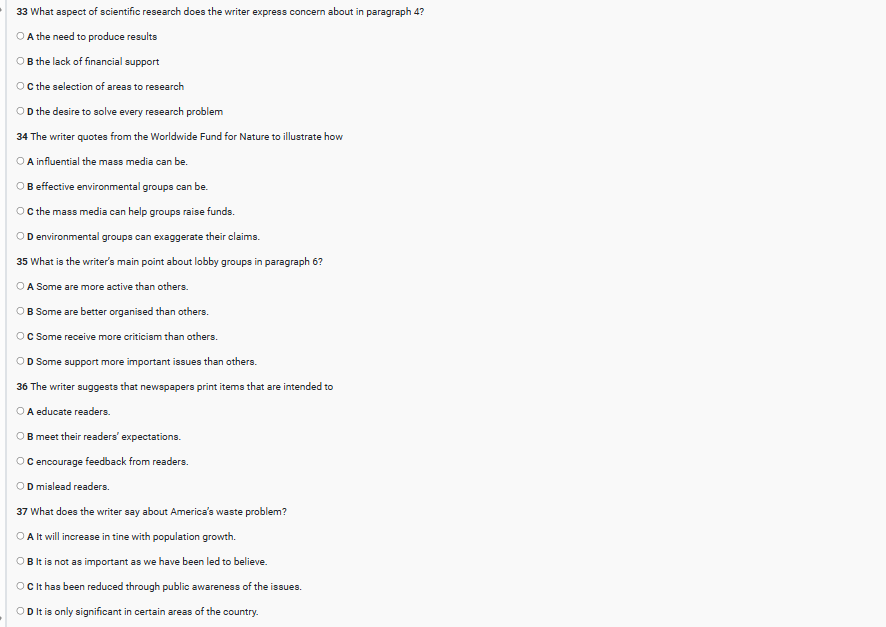
The Q22 sense of touch has sometimes been described as weak too, but this view is probably mistaken. Trainers of captive dolphins and small whales often remark on their animals’ responsiveness to being touched or rubbed, and both captive and free-ranging cetacean individuals of all species (particularly adults and calves, or members of the same subgroup) appear to make frequent contact. This contact may help to maintain order within a group, and stroking or touching are part of the courtship ritual in most species. The area around the blowhole is also particularly sensitive and captive animals often object strongly to being touched there.

The sense of vision is developed to different degrees in different species. Baleen species studied at close quarters underwater – specifically a grey whale calf in captivity for a year, and free-ranging right whales and humpback whales studied and filmed off Argentina and Hawaii – have obviously tracked objects with vision underwater, and they can apparently see moderately well both in water and in air. However, the position of the eyes so restricts the field of vision in Q16 baleen whales that they probably do not have stereoscopic vision.

On the other hand, the position of the eyes in most dolphins and porpoises suggests that they have stereoscopic vision Q17 forward and downward. Eye position in Q18&23 freshwater dolphins, which often swim on their side or upside down while feeding, suggests that what vision they have is stereoscopic forward and upward. By comparison, the bottlenose dolphin has extremely keen vision in Q19 water. Judging from the way it watches and tracks Q24 airborne flying fish, it can apparently see fairly well through the air-water interface as well. And although preliminary experimental evidence suggests that their in-air vision is poor, the accuracy with which dolphins leap high to take small fish out of a trainer’s hand provides anecdotal evidence to the contrary.

Such variation can no doubt be explained with reference to the habitats in which individual species have developed. For example, vision is obviously more useful to species inhabiting Q25 clear open waters than to those living in turbid rivers and flooded plains. The South American beauty and Chinese beiji, for instance, appear to have very limited vision, and the Indian susus are blind, their eyes reduced to slits that probably allow them to sense only the direction and intensity of light.

Although the senses of taste and smell appear to have deteriorated, and vision in water appears to be uncertain, such weaknesses are more than compensated for by cetaceans’ well-developed Q26 acoustic sense. Most species are highly vocal, although they vary in the range of sounds they produce, and many forage for food using echolocation1. Large baleen whales primarily use the Q20 lower frequencies and are often limited in their repertoire. Notable exceptions are the nearly song-like choruses of Q21 bowhead whales in summer and the complex, haunting utterances of the Q21 humpback whales. Toothed species in general employ more of the frequency spectrum and produce a wider variety of sounds, than baleen species (though the sperm whale apparently produces a monotonous series of high-energy clicks and little else). Some of the more complicated sounds are clearly communicative, although what role they may play in the social life and ‘culture’ of cetaceans has been more the subject of wild speculation than of solid science.


Easily Get Required Score I am interested in IELTS Pass with Confidence, Dehradun Small Batch Size with Flexible Time, professional faculty.

phone icon
8439000086
8439000087
7055710003
7055710004
IELTS Simulation 323 GMS Road, Near Ballupur Chowk, Dehradun, India
Chat on WhatsApp
email: info at ieltsband7.com