IELTS READING – Venus in Transit S46AT2

IELTS Reading Venus in Transit reading practice test has 10 questions belongs to Astronomy & History of Science subject..

June 2004 saw the first passage., known as a ‘transit` of the planet Venus across the face of the Sun in 122 years. Transits have helped shape our view of the whole Universe, as Heather Cooper and Nigel Henbest explain

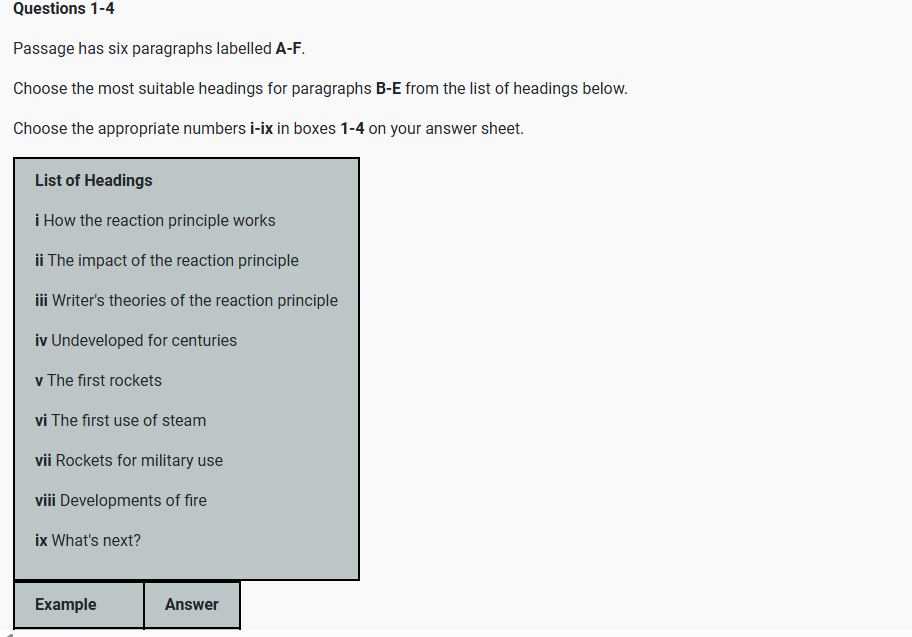
A. On 8 June 2004, more than half the population of the world were treated to a rare astronomical event. For over six hours, the planet Venus steadily inched its way over the surface of the Sun. This “transit` of Venus was the first since 6 December 1882. On that occasion, the American astronomer Professor Simon Newcomb led a party to South Africa to observe the event. They were based at a girls’ school, where – if is alleged – the combined forces of three schoolmistresses outperformed the professionals with the accuracy of their observations.


B. For centuries, transits of Venus have drawn explorers and astronomers alike to the four corners of the globe. And you can put it all down to the extraordinary polymath Edmond Halley. In November 1677, Halley observed a transit of the innermost planet Mercury, from the desolate island of St Helena in the South Pacific. He realized that from different latitudes, the passage of the planet across the Sun’s disc would appear to differ. By timing the transit from two widely-separated locations, teams of astronomers could calculate the parallax angle – Q19 the apparent difference in position of an astronomical body due to a difference in the observer’s position. Calculating this angle would allow astronomers to measure what was then the ultimate goal; the distance of the Earth from the Sun. This distance is known as the ‘astronomical unit` or AU.

C. Halley was aware that the AU was one of the most fundamental of all astronomical measurements. Johannes Kepler, in the early 17th century, had shown that Q20 the distances of the planets from the Sun governed their orbital speeds, which were easily measurable. But no-one had found a way to calculate accurate distances to the planets from the Earth. The goal was to measure the AU; then, knowing the orbital speeds of all the other planets round the Sun, the scale of the Solar System would fall into place. However, Halley realized that Mercury was so far away that its parallax angle would be very difficult to determine. As Venus was closer to the Earth, its parallax angle would be larger and Halley worked out that by using Venus it would be possible to measure the Sun`s distance to 1 part in 500. But there was as problem: transits of Venus, unlike those of Mercury; are rare. occurring in pairs roughly eight years apart every hundred or so years. Nevertheless, Q22 he accurately predicted that Venus would cross the face of the Sun in both 1761 and 1769 – though he didn’t survive to see either.

D. Inspired by Halley’s suggestion of a way to pin down the scale of the Solar System, teams of British and French astronomers set out on expeditions to places as diverse as India and Siberia. But things weren’t helped by Britain and France being at war. The person who deserves most sympathy is the French astronomer Guillaume Le Gentil.

He was thwarted by the fact that the British were besieging his observation site at Pondicherry in India. Q15 Fleeing on a French warship crossing the Indian Ocean, Le Gentil saw a wonderful transit – but the ship`s pitching and Q21 rolling ruled out any attempt at making accurate observations. Undaunted, he remained south of the equator, keeping himself busy by studying the islands of Mauritius and Madagascar before setting off to observe the next transit in the Philippines. Ironically after travelling nearly 50,000 kilometres, Q23 his view was clouded out at the last moment, a very dispiriting experience.

E. While the early transit timings were as precise as instruments would allow the measurements were dogged by the ‘black drop’ effect. Q24 When Venus begins to cross the Sun’s disc, it looks smeared not circular – which makes it difficult to establish timings. This is due to diffraction of light. The second problem is that Venus exhibits a halo of light when it is seen just outside the Sun’s disc. Q17 While this showed astronomers that Venus was surrounded by a thick layer of gases refracting sunlight around it, both effects made it impossible to obtain accurate timings.

F. But astronomers labored hard to analyze the results of these expeditions to observe Q18 Venus transits. Johann Franz Encke, Director of the Berlin Observatory, finally determined a value for the AU based on all these parallax measurements: 153340,000 km. Reasonably accurate for the time, that is quite close to today’s value of 149,597,870 km, determined by radar, which has now superseded transits and all other methods in accuracy. The AU is a cosmic measuring rod, and the basis of how we scale the Universe today Q14 The parallax principle can be extended to measure the Q26 distances to the stars. If we look at a star in January – when Earth is at one point in its orbit – it will seem to be in a different position from where it appears six months later. Knowing the width of Earth`s orbit, the parallax shift lets astronomers calculate the distance.

G. June 2004’s transit of Venus was thus more of an astronomical spectacle than a scientifically important event. Q16 But such transits have paved the way for what might prove to be one of the most vital breakthroughs in the cosmos – detecting Earth-sized planets orbiting other stars.


 Prepare for IELTS Test International Experienced Teacher Best Training By CELTA Trainer.

phone icon
8439000086
8439000087
7055710003
7055710004
IELTS Simulation 323 GMS Road, Near Ballupur Chowk, Dehradun, India
Chat on WhatsApp
email: info at ieltsband7.com

IELTS READING – Children with auditory problems S46AT1

 IELTS Reading Children with auditory problems reading practice test has 10 questions belongs to Health & Education subject..

A. Hearing impairment or other auditory function deficit in young children can have a major impact on their development of speech and communication, resulting in a detrimental effect on their ability to learn at school. This is likely to have major consequences for the individual and the population as a whole. Q6 The New Zealand Ministry of Health has found from research carried out over Q7 two decades that 6-10% of children in that country are affected by hearing loss.

B. A preliminary study in New Zealand has shown that classroom noise presents a major concern for teachers and pupils. Q11 Modern teaching practices, the organization of desks in the classroom, poor classroom acoustics, and mechanical means of ventilation such as Q12 air-conditioning units all contribute to the number of children unable to comprehend the teachers voice. Q3 Education researchers Nelson and Soli have also suggested that recent trends in learning often involve collaborative interactions of multiple minds and tools as much as individual possession of information. This all amounts to heightened activity and noise levels, which have the potential to be particularly serious for children experiencing auditory function deficit. Noise in classrooms can only exacerbate their difficulty in comprehending and processing verbal communication with other children and instructions from the teacher.

C. Children with auditory function deficit are potentially failing to learn to their maximum potential because of noise levels generated in classrooms. The effects of noise on the ability of children to team effectively in typical classroom environments are now the subject of increasing concern. Q2 The International Institute of Noise Control Engineering(I-INCE), on the advice of the World Health Organization, has established an international working party, which includes New Zealand, to evaluate noise and reverberation control for school rooms.

D. While the detrimental effects of noise in classroom situations are not limited to children experiencing disability, those with a disability that affects their processing of speech and verbal communication could be extremely vulnerable. Q5 The auditory function deficits in question include hearing impairment, autistic spectrum disorders (ASD) and attention deficit disorders ADD/ADHD).

E. Autism is considered a neurological and genetic life-long disorder that causes discrepancies in the way information is processed. This disorder is characterized by interlinking problems with social imaginations, social communication, and social interaction. According to Janzen, this affects the ability to understand and relate in typical ways to people, understand events and objects in the environment, and understand or respond to sensory stimuli. Autism does not allow learning or thinking in the same ways as in children who are developing normally.

Autistic spectrum disorders often result in major difficulties in comprehending verbal information and speech processing. Those experiencing these disorders often find sounds such as Q8 crowd noise and the noise generated by machinery painful and distressing. This is difficult to scientifically quantify as such extra-sensory stimuli vary greatly from one autistic individual to another. But a child who finds any type of noise in their classroom or learning space intrusive is likely to be adversely affected in their ability to process information.

F. The attention deficit disorders are indicative of neurological and genetic disorders and are characterized by difficulties with sustaining attention, effort and persistence, organization skills, and disinhibition. Children experiencing these disorders find it difficult to screen out unimportant information, and focus on everything in the environment rather than attending to a single activity. Background noise in the classroom becomes a major distraction, which can affect their ability to concentrate.

G. Children experiencing an auditory function deficit can often End speech and communication very difficult to isolate and process when set against high levels of background noise. These levels come from outside activities that penetrate the classroom structure, from teaching activities, and other noise generated inside, which can be exacerbated by room reverberation. Strategies are needed to obtain the optimum classroom construction and perhaps a change in classroom culture and methods of teaching. In particular, the effects of noisy classrooms and activities on those experiencing disabilities in the form of auditory function deficit need thorough investigation. It is probable that many undiagnosed children exist in the education system with Q9 invisible disabilities. Their needs are less likely to be met than those of children with known disabilities

H. Q1 The New Zealand Government has developed a New Zealand Disability Strategy and has embarked on a wide-ranging consultation process. The strategy recognizes that people experiencing disability face significant barriers in achieving a full quality of life in areas such as attitude, education, employment, and access to services. Q10 Objective 3 of the New Zealand Disability Strategy is to ‘Provide the Best Education for Disabled People’ by improving education so that all children, youth learners, and adult learners will have equal opportunities to learn and develop within their already existing local school. For a successful education, the learning environment is vitally significant, so any effort to improve this is likely to be of great benefit to all children, but especially to those with auditory function disabilities.

I. A number of countries are already in the process of formulating their own standards for the control and reduction of classroom noise. New Zealand will probably follow their example. The literature to date on noise in school rooms appears to focus on the effects on schoolchildren in general, their teachers, and the hearing impaired. Only limited attention appears to have been given to those students experiencing the other disabilities involving auditory function deficit. Q4 It is imperative that the needs of these children are taken into account in the setting of appropriate international standards to be promulgated in future.


 Prepare for IELTS IELTS Test International Experienced Teacher Best Training By CELTA Trainer. Best Results Easily Get Required Score IELTS Exam Dates Available, Small Batch Size with Flexible Time, Professional.

phone icon
8439000086
8439000087
7055710003
7055710004
IELTS Simulation 323 GMS Road, Near Ballupur Chowk, Dehradun, India
Chat on WhatsApp
email: info at ieltsband7.com

IELTS READING – THE HISTORY OF THE TORTOISE S45AT3

 IELTS Reading THE HISTORY OF THE TORTOISE reading practice test has 10 questions belongs to Biology & Evolutionary Science subject..

If you go back far enough, everything lived in the sea. At various points in evolutionary history, enterprising individuals within many different animal groups moved out onto the land, sometimes even to the most parched deserts, taking their own private seawater with them in blood and cellular fluids. In addition to the reptiles, birds, mammals and insects which we see all around us, other groups that have succeeded out of water include scorpions, snails, crustaceans such as woodlice and land crabs, millipedes and centipedes, spiders and various worms. And we mustn’t forget the Q27 plants, without whose prior invasion of the land none of the other migrations could have happened.


Moving from water to land involved a major redesign of every aspect of life, including Q28&29 breathing and reproduction. Nevertheless, a good number of thoroughgoing land animals later turned around, abandoned their hard-earned terrestrial re-tooling, and returned to the Water Seals have only gone part way back. They show us what the intermediates might have been like, on the way to extreme cases such as whales and dugongs. Whales (including the small whales we call dolphins) and dugongs, with their close cousins the manatees, ceased to be land creatures altogether and reverted to the full marine habits of their remote ancestors. They don’t even come ashore to breed. They do, however, still breathe air, having never developed anything equivalent to the Q30 gills of their earlier marine incarnation. Turtles went back to the sea a very long time ago and, like all vertebrate returnees to the water, they breathe air. However, they are, in one respect, less fully given back to the water than whales or dugongs, for turtles still lay their eggs on beaches.

There is evidence that all modem turtles are descended from a terrestrial ancestor which lived before most of the dinosaurs. There are two key fossils called Progaochelys quenstedtiand Palaeochersis talampayensis dating from early dinosaur times, which appear to be close to the ancestry of all modem turtles and tortoises. Q32 You might wonder how we can tell whether fossil animals lived on land or in water, especially if only fragments are found. Sometimes it`s obvious. Q33 Ichthyosarus were reptilian contemporaries of the dinosaurs, with fins and streamlined bodies. The fossils look like dolphins and they surely lived like dolphins, in the water. With turtles it is a little less obvious. One way to tell is by measuring the bones of their forelimbs.

Walter Joyce and Jacques Gauthier, at Yale University, obtained Q34 three measurements in these particular bones of 71 species of living turtles and tortoises. They used a kind of Q35 triangular graph paper to plot the three measurements against one another. All the land tortoise species formed a tight Q36 cluster of points in the upper part of the triangle; all the water turtles cluster in the lower part of the triangular graph. There was no overlap, except when they added some species that spend time both in water and on land. Sure enough, these Q37 amphibious species show up on the triangular graph approximately Q38 half way between the ‘wet cluster’ of sea turtles and the ‘dry cluster’ of land tortoises. ‘The next step was to determine where the fossil fell. The bones of P. quenstedti and P. talampayensis leave us in no doubt. Their points on the graph are right in the thick of the dry cluster. Both these fossils were Q39 dry-land tortoises. They come from the era before our turtles returned to the water.

You might think, therefore, that modem land tortoises have probably stayed on land ever since those early terrestrial times, as most mammals did after a few of them went back to the sea. But apparently not. If you draw out the family tree of all modern turtles and tortoises, nearly all the branches are aquatic. Today’s land tortoises constitute a single branch, deeply nested among branches consisting of aquatic turtles. This suggests that modern land tortoises have not stayed on land continuously since the time of P. quenstedti and P. talampayensis. Rather, their ancestors were among those who went back to the water, and they then re-emerged back onto the land in (relatively) more recent times.

Tortoises therefore represent a remarkable double return. In common with all mammals, reptiles, and binds, their remote ancestors were marine fish and before that various more or less worm-like creatures stretching back, still in the sea, to the primeval bacteria. Later ancestors lived on land and stayed there for a very large number of generations. Later ancestors still evolved back into the water and became sea turtles. And finally, they returned yet again to the land as tortoises, some of which now live in the driest of deserts.


Boost Your Score: Practice IELTS Online with IELTS Simulator.

phone icon
8439000086
8439000087
7055710003
7055710004
IELTS Simulation 323 GMS Road, Near Ballupur Chowk, Dehradun, India

Chat on WhatsApp
email: info at ieltsband7.com

IELTS READING – IS THERE ANYBODY OUT THERE? S45AT2

IELTS Reading IS THERE ANYBODY OUT THERE? reading practice test has 10 questions belongs to Astronomy & Space Science subject..

The Search for Extra-Terrestrial Intelligence

The question of whether we are alone in the Universe has haunted humanity for centuries, but we may now stand poised on the brink of the answer to that question, as we search for radio signals from other intelligent civilizations. This search is often known by the acronym SETI [search for extraterrestrial intelligence], is a difficult one. Although groups around the world have been searching intermittently for three decades, it is only now that we have reached the level of technology where we can make a determined attempt to search all nearby stars for any sign of life.

A. The primary reason for the search is basic curiosity – the same curiosity about the natural world that drives all pure science. We want to know whether we are alone in the Universe. We want to know whether life evolves naturally if given the right conditions, or whether there is something very special about the Earth to have fostered the variety of life forms that we see around us on the planet. The simple detection of a radio signal will be sufficient to answer this most basic of all questions. In this sense, SETI is another cog in the machinery of pure science which is continually pushing out the horizon of our knowledge. However, there are other reasons for being interested in whether life exists elsewhere. For example, we have had civilization on Earth for perhaps only a few thousand years, and the threats of nuclear war and pollution over the last few decades have told us that our survival may be tenuous. Will we last another two thousand years or will we wipe ourselves out? Since the lifetime of a plant like ours is several billion years, we can expect that if other civilizations do survive in our galaxy, their ages will range from zero to Q18 several billion years. Thus any other civilization that we hear from is likely to be far older on average than ourselves. The mere existence of such a civilization will tell of that long-term survival is possible, and gives us some cause for optimism. Q21 It is even possible that the older civilization may pass on the benefits of their experience in dealing with threats to survival such as nuclear war and global pollution, and other threats that we haven’t yet discovered.

B. In discussing whether we are alone, most SETI scientists adopt two ground rules. First. UFOs [Unidentified Flying objects] are generally ignored since most scientists don`t consider the evidence for them to be strong enough to bear serious consideration (although it is also important to keep an open mind Q14 in case any really convincing evidence emerges in the future). Second, Q14&22 we make a very conservative assumption that we are looking for a life form that is pretty well like us, since if it differs radically from us we may well not recognize it as a life form, quite apart from whatever we are able to communicate with it. In other words, the life form we are looking for may well have two green heads and seven fingers, but it will nevertheless resemble us in that it should communicate with its fellows. Be interested in the Universe, Live on a planet orbiting a star like our Sun, and perhaps most restrictively have chemistry, like us, based on carbon and water.

C. Even when we make these assumptions. our understanding of other life forms is still severely limited. We do not even know. for example, how many stars have planets, and we certainly do not know how likely it is that life will arise naturally, given the right conditions. However, when we look at the 100 billion stars in our galaxy [the Milky Way], and 100 billion galaxies. In the observable Universe, Q15 It seems inconceivable that at least one of these planets does not have a life form on it; in fact, the best educated guess we can make using the little that we do know about the conditions for carbon-based life, leads us to estimate that perhaps one in 100,000 stars might have a life-bearing planet orbiting it. That means that our nearest neighbors are perhaps 1000 light years away. which is almost next door in astronomical terms.

D. Q16 An alien civilization could choose many different ways of sending information across the galaxy, but many of these either require too much energy. or else are severely attenuated while traversing the vast distances across the galaxy. It bums out that. for a given Q16 amount of transmitted power: radio waves in the frequency range 1000 to 3000 MHz travel the greatest distance. and so all searches to date have concentrated on looking for Q19 radio waves in this frequency range. So far there have been a number of searches by various groups around the world, including Australian searches using the radio telescope at Parkes, New South Wales. Q24 Until now there have not been any detections from the few hundred stars which have been searched. The scale of the searches has been increased dramatically since 1992 when the US Congress voted NASA $10 million per year for ten years to conduct a thorough search for extra-terrestrial life. Much of the money in this project is being spent on developing the special hardware needed to search many frequencies at once. The project has two parts. One part is a targeted search using the world’s largest radio telescopes. The American-operated telescope in Arecibo. Puerto Rico and the French telescope in Nancy in France. This part of the project is searching the nearest Q20 1000 likely stars with a high sensibility for signals in the frequency range 1000 to 3000 MHz. The other parts of the project is an undirected search which is monitoring all of the space with a lower using the smaller antennas of NASA`s Deep Space Network.

E. Q17 There is considerable debate over how we should react if we detect a signal from an alien civilization. Q26 Everybody agrees that we should not reply immediately. Quite apart from the impracticality of sending e reply over such large distances at short notice, it raises a host of ethical questions that would have to be addressed by the global community before any reply could be sent. Would the human race face the culture shock if faced with a superior and much older civilization? Luckily, there is no urgency about this. The stars being searched are hundreds of light years away. so it takes hundreds of years for their signal to reach us, and a further few hundred years for our reply to reach them. It is not important, then, if there`s a delay of a few years, or decades, while the human race debates the question of whether to reply and perhaps carefully drafts a reply.


Learn From Experienced Teacher Best IELTS Coaching Dehradun Best IELTS in Dehradun Uttarakhand GMS Road BEST coaching in Dehradun Apply for Class Courses Today Good Results.

phone icon
8439000086
8439000087
7055710003
7055710004
IELTS Simulation 323 GMS Road, Near Ballupur Chowk, Dehradun, India
Chat on WhatsApp
email: info at ieltsband7.com