Unlock the Benefits of IELTS Listening

Access our library of Listening practice audio in MP3 format for on-the-go listening, and PDFs for offline study sessions. Download MP3 and download PDF file for offline practice. 

IELTS LISTENING – CONFLICT AT WORK S23T4

IELTS listening Conflict at Work listening practice test has 10 questions belongs to the Business & Workplace Communication subject. 

Over the years, attitudes towards workers have changed considerably. After all, there was a time when workers had no rights at all and laboured in appalling conditions. Conditions have improved a lot, but conflict in the workplace is still common. And human resources managers nowadays need to be able to deal with it when necessary.

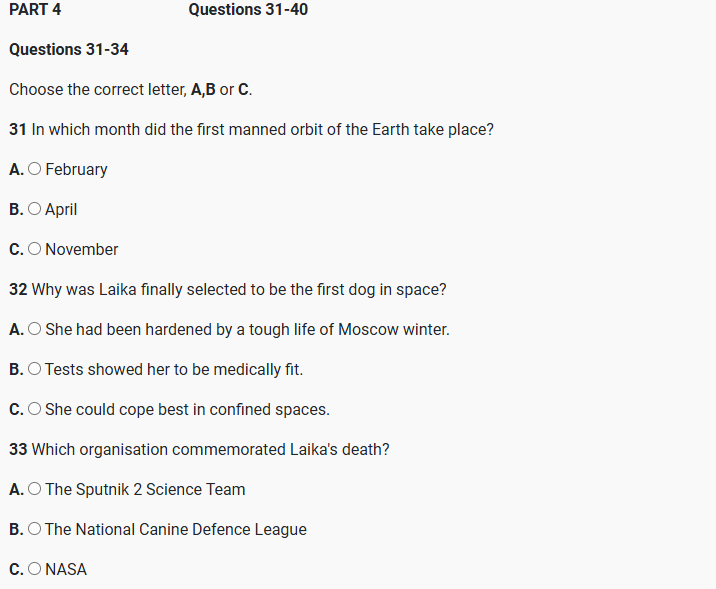
Q31 What is conflict in the workplace? Definitions vary, but I’m taking it to refer to a whole range of behaviours that the victim finds unacceptable, from minor, harmless arguments to at the opposite extreme – physical violence. Much of this is covered by the term bullying, by which I mean one or more people behaving abusively or aggressively against another who is in a weaker position. Although all behaviour like this is a form of conflict, not all conflict can be described in these terms.


As with all human behaviour, there are numerous reasons for it. But Q32 often it’s caused by someone who feels the need to show their superiority over someone else, in order to feel that they aren’t at the lowest level in a hierarchy or a group of people.

Q33 In some cases, one person simply dislikes the other, on the basis that the personality of one is in some way incompatible with that of the other person. A general habit of optimism in one person could make them intolerant of a colleague who’s constantly pessimistic – not that that justifies treating them badly, of course.

Q34 Some conflicts arise when people are more interested in promoting themselves and their team than in the company as a whole. These conflicts are called ‘structural’ and could come about, for example, when a sales team believe they are the only people in the business who do any useful work and look down on behind-the-scenes administrators.

Q35 Conflict obviously affects the individuals concerned – the situation is likely to be very stressful for victims, resulting in their absence from work, possibly for months. For the company, if no effort is made to deal with conflict, it can spiral out of control, and even lead to the breakdown of the business.

Some interesting work with chief executives – CEOs – has uncovered some of the reasons why they may treat colleagues badly. Q36 Many CEOs combine two opposing characteristics: confidence – that is, the belief that they’re capable of great achievements – with a high level of anxiety, and a fear of missing targets, whether set by themselves or by the directors of the company. This combination can make them respond badly to anyone who questions their decisions.

In a high-pressure work environment, such characteristics become problematic. And Q37 it’s particularly difficult to tackle the situation where colleagues, managers and board members are all trying to achieve their own visions. When they can’t agree on strategic issues and on where they see the business going, there are real problems.

For managers at lower levels within the organisation, it might seem that an autocratic form of management – where the chief executive gives orders and everyone else has to obey – would see more conflict than others. Interestingly. though, Q38 a company with a more democratic business model can suffer more, when uncertainty about who to report to leads to conflicting demands.

Now I’ll say a little about dealing with the type of conflict that has harmful effects. Of course the ideal is to prevent it arising in the first place. Q39 A good manager. at any level, will make efforts to earn the respect of the people they work with, particularly those who report to them. That will involve politeness in all communications, and treating them as equals who happen to have a different role within the organisation.

Sometimes, of course, conflict does occur, and can get out of hand. In such cases, the human resources department often gets involved. However, Q40 if one of the parties in a conflict sees human resources as simply a mouthpiece for the chief executive, then an external mediator might be able to help. by talking to both sides, and trying to find the truth of what’s been happening, they can build a clear picture of the situation, and give feedback that both sides will accept, precisely because they’re independent.


Boost Your Score: Practice IELTS Online with IELTS Simulator.

phone icon
8439000086
8439000087
7055710003
7055710004
IELTS Simulation 323 GMS Road, Near Ballupur Chowk, Dehradun, India

Chat on WhatsApp
email: info at ieltsband7.com
IELTS LISTENING – Scandinavian Studies S23T3

 IELTS listening Scandinavian Studies listening practice test has 10 questions belongs to the Education & Cultural Studies subject.

BETH: Oh good morning. You must be James. I’m Beth Cartwright – please call me Beth.

JAMES: Thank you.

BETH: Now as this is your first tutorial since you started on the Scandinavian Studies course, I’d like to find out something about you. Why did you decide to take this course?


JAMES: Q21 Well, my mother is Danish, and although we always lived in England, she used to talk about her home a lot, and that made me want to visit Denmark. We hardly ever did, though – my mother usually went on her own. But whenever her relations or friends were in England they always came to see us.

BETH: I see. So I assume you already speak Danish, one of the languages you’ll be studying.

JAMES: I can get by when I talk to people, though I’m not terribly accurate.

BETH: Now you probably know that you’ll spend the third year of the course abroad. Have you had any thoughts about that?

JAMES: I’m really looking forward to it. And although Denmark seems the obvious place to go, because of my family connections, I’d love to spend the time in Iceland.

BETH: Oh, I’m sure it can be arranged. Do you have any plans for when you graduate? A lot of students go on to take a master’s degree.

JAMES: I think the four years of the undergraduate course will be enough for me. Q22 I’m interested in journalism, and I quite like the idea of moving to Scandinavia and writing for magazines. I’d find that more creative than translating, which I suppose most graduates do.

BETH: OK. Now how are you finding the courses you’re taking this term, James?

JAMES: Well, I’m really enjoying the one on Swedish cinema.

BETH: Q23 That’ll continue next term, but the one on Scandinavian literature that’s running at the moment will be replaced by more specialised courses. Oh. and by the way. if you’re interested in watching Danish television programmes ~ there’s going to be a course on that the term after next.

JAMES: That sounds good.

BETH: Have you started thinking about the literature paper that you have to write in the next
few weeks?

JAMES: Yes, my first choice would be to do something on the Icelandic sagas.

BETH: Hmm. The trouble with that is that a lot of people choose that topic, and it can be difficult to get hold of the books you’ll need. Why not leave that for another time?

JAMES: Right.

BETH: Q24 You might find modern novels or 19th century playwrights interesting.

JAMES: I’ve read or seen several plays in translation, so that would be a good idea.

BETH: Fine. I’ll put you down for that topic.

JAMES: Right. So what would you advise me to aim at in the paper?

BETH: First I suggest you avoid taking one writer and going into a great deal of detail. That approach certainly has its place. but Q25 I think you first need to get an understanding of the literature in the context of the society in which it was produced – who it was written for. how it was published, and so on. I also think that’s more fruitful than placing it within the history of the genre.

JAMES: OK, that sounds reasonable.

JAMES: Could I ask for some advice about writing the paper I’m working on about the Vikings? ! have to do that this week, and I’m a bit stuck.

BETH: Of course. Have you decided yet what to write about?

JAMES: No, I haven’t. There’s so much that seems interesting ~~ Viking settlement in other countries, trade, mythology…

BETH: Well, Q26 what I suggest is that you read an assignment a student wrote last year. which is kept in the library. It’s short and well-focused, and I’m sure you’ll find it helpful. I’ll give you the details in a moment. Textbooks usually cover so many topics, it can be very difficult to choose just one.

JAMES: OK. I’ve got a DVD of the film about the Vikings that came out earlier this year. Should I watch that again?

BETH: If it’s the one I am thinking of, hmm, I’d ignore it – it’s more fantasy than reality. Q27 But I’ve got a recording of a documentary that you should watch. It makes some interesting and provocative points, which I think will help you to focus your topic.

JAMES: Right.

JAMES: Q28 So then should I work out an outline?

BETH: Yes. Just headings for different sections, at this stage. And Q29 then you should start looking for suitable articles and books to draw on. and take notes which you organise according to those headings.

JAMES: I see.

BETH: Q30 Then out short phrases and sentences as bullet points under each heading. Make sure that this skeleton makes sense and flows properly, before writing up the paper in full.

JAMES: OK. Thanks, that’s very helpful.


Best Results Easily Get Required Score IELTS Exam Dates Available, Small Batch Size with Flexible Time, Professional.

phone icon
8439000086
8439000087
7055710003
7055710004
IELTS Simulation 323 GMS Road, Near Ballupur Chowk, Dehradun, India
Chat on WhatsApp
email: info at ieltsband7.com
IELTS LISTENING – Theatre Trip to Munich S23T2

IELTS listening Theatre Trip to Munich listening practice test has 10 questions belongs to the Arts / Cultural Trip subject. 

Right. I’ve now almost succeeded in finalising plans for our tour, so I’ll bring you up to date with what I know.

As you know, we’re flying first to Munich, on Monday the 4th.

The flight is at 11.30. so it’s too early to have lunch at the airport. Q11 I suggest we meet there for coffee at 10, which should give us plenty of time for breakfast before we leave home.

🎧Attempt Free Listening Test…

⬇️  Download Free PDF

Q12 When we arrive in Munich, we’ll be met at the airport by Claus Bauer. Claus works for a tour operator, and he’ll look after us for the time we’ll be in Germany. He’s already liaised with the managers of the theatres we’re going to visit, and he’s also arranged for an officer of the National Theatre in Munich to show us round the theatre one afternoon during our stay.

Now last time we discussed this trip, I didn’t have the precise cost for hotel rooms, but now I have. Q13 The normal rate at the hotel where we’re staving is 150 euros a night for a double room. I’d hoped to get that down to 120 euros, but in fact I’ve been able to negotiate a rate of 110. That’ll be reflected in the final payment which you’ll need to make by the end of this week.

On Tuesday, the day after our arrival, l had hoped we could sit in on a rehearsal at one of the theatres, but unfortunately that’s proved very difficult to arrange, so instead we’ll have a coach trip to one of the amazing castles in the mountains south of Munich.

On Tuesday evening, we’ll all have dinner together in a restaurant near our hotel. From talking to you all about your preferences, it was clear that a typical local restaurant would be too meat-oriented for some of you. Q14 Some of you suggested an Italian restaurant, but I must confess that I decided to book a Lebanese one. as we have plenty of opportunities to go to an Italian restaurant at home.

Q15 On Wednesday afternoon, the director of the play we’re going to see that evening will talk to us at the theatre. She’ll describe the whole process of producing a play. including how she chose the actors, and, as the play we’re going to see is a modern one, how she worked with the playright.

Now I’d just like to make a few points about the plays we’re going to see, partly because it might influence your choice of clothes to take with you!

Q16 The play we’re seeing on Wednesday evening is a modern one, and we’re going to the premiere, so it’ll be quite a dressy occasion, though of course you don’t have to dress formally. I gather it’s rather a multimedia production, with amazing lighting effects and a soundtrack of electronic music, though unfortunately the playwright is ill and is unlikely to be able to attend.

Q17 On Thursday we’re seeing a play that was first performed last year, when it was commissioned to mark a hundred years since the birth in the town of a well-known scientist. We’re going to see a revival of that production, which aroused a lot of interest.

Q18 Friday’s play will really make you think hard about what clothes to pack, as it’ll be in the garden of a palace. It’s a beautiful setting, but I’d better warn you, there won’t be much protection from the wind.

Q19 On Saturday, we’re going by coach to a theatre in another town, not far from Munich. This will be the opening of a drama festival, and the mayor and all the other dignitaries of the town will be attending. After the performance, the mayor is hosting a reception for ail the audience, and there’ll be a band playing traditional music of the region.

And after having a day off on Sunday, Q20 our final play is on Monday, and it’s in the stunning setting of the old Town Hall which dates back to the 14th century. The performance marks the fifty years that the lead actor has been on stage, and the play is the one where he made his first professional appearance all those years ago.

And the day after that, we’ll be flying back home. Now have you got any questions before I …

🎧Attempt Free Listening Test…

Boost Your Score: Practice IELTS Online with IELTS Simulator.

phone icon
8439000086
8439000087
7055710003
7055710004
IELTS Simulation 323 GMS Road, Near Ballupur Chowk, Dehradun, India
Chat on WhatsApp
email: info at ieltsband7.com

IELTS LISTENING – PUBLIC LIBRARY S24T1

 IELTS listening Public Library listening practice test has 10 questions belongs to the Education & Training subject.

SUSIE: Hello?

PAUL: Hi, Susie, it’s Paul here. How are you? Enjoying your new job? You’re working at the library, aren’t you?

SUSIE: Yes. I started when Example the library re-opened a month ago. It’s great.

PAUL: Actually Carol and I have been meaning to join for a while.

SUSIE: Oh, you should. It doesn’t cost anything, and the new library has all sorts of facilities. It’s not just a place where you borrow books. For instance, there’s an area with comfortable seats where you can sit and read the magazines they have there. Some people spend the whole morning there.

🎧Attempt Free Listening Test…

⬇️  Download Free PDF

PAUL: Mmm. Wish I had that amount of time to spend!

SUSIE: Yes, you must be pretty busy at present, with the children and everything?

PAUL: We are, yes. But we’re hoping to get away this summer. We’re thinking of going to Greece.

SUSIE: Well, Q1 we’ve got a much larger section of the library devoted to travel books now. so you should come and have a look. I can’t remember if there’s anything specifically on Greece, but I should think so.

PAUL: OK. Now Carol’s organising a project for the history class she teaches at school -it’s about life in the town a hundred years ago. Do you have anything that might be useful?

SUSIE: Yes. actually Q2 we’ve now got a new section with materials on the history of the town and surrounding region.

PAUL: Right. I’ll tell her. You can’t always find that sort of thing on the internet. Now in the old library there used to be a separate room with reference books. It was a really nice quiet room.

SUSIE: Yes. We’ve put those books in the main part of the library now, but Q3 we do have a room called the community room, it can be hired out for meetings. but at other times people can use it to study.

PAUL: I might use that. It’s hard to find anywhere quiet at home sometimes.

SUSIE: I can’t remember how old your son and daughter are … Q4 we’ve introduced a special section of fiction written specially for teenagers. but they might be a bit young for that?

PAUL: Yes, they would be.

SUSIE: Well, we do have lots of activities for younger children.

PAUL: Yes?

SUSIE: For example Q5 we have a Science Club. At the next meeting. they’re going to be doing experiments with stuff that everyone has in the kitchen – sugar and flour and so on.

PAUL: They might be interested, yes.

SUSIE: And we have a competition for children called Reading Challenge. That doesn’t begin until after the end of term. They have to read six books, and they get a certificate if they manage it.

PAUL: So that gives them something to do while they’re on holiday, instead of getting bored.

SUSIE: That’s the idea. And there’s special activities for adults too. Q6 On Friday we have a local author called Tanya Streep who’s going to be talking about her new novel. It’s called ‘Catch the Mouse’ and she based the story on a crime that actually took place here years ago.

PAUL: Right. We’re not free on Friday, but I’ll look out for the book.

SUSIE: Now this probably isn’t for you. but Q7 we do have IT support available for members. We get quite a few older people coming along who are wanting to get up to speed with computer technology. It’s on Tuesday mornings – they don’t need to make an appointment or anything, they just turn up.

PAUL: Well, my mother might be interested, I’ll let her know.

SUSIE: OK. Q8 And there’s another service which you wouldn’t expect from a library. which is a free medical check-up. The hospital arranges for someone to come along and measure the level of sugar in your blood, and they check cholesterol levels at the same time.

PAUL: Really?

SUSIE: Yes, but that’s only for the over-60s, so you wouldn’t qualify

PAUL: OK. Well, I’ll tell my mother, she might be Interested

SUSIE: What other information … well, Q9 we do have a little shop with things like wallcharts and greetings cards, and also stamps so you can post the cards straight away, which is really useful.

PAUL: Yeah. Well, I’ll bring the children round at the weekend and we’ll join. Oh, one more thing – I’ll be bringing the car, Q10 is there parking available?

SUSIE: Yes. and it’s free in the evening and at weekends.

PAUL: Perfect. Well, thanks, Susie see you …

🎧Attempt Free Listening Test…

Boost Your Score: Practice IELTS Online with IELTS Simulator.

phone icon
8439000086
8439000087
7055710003
7055710004
IELTS Simulation 323 GMS Road, Near Ballupur Chowk, Dehradun, India
Chat on WhatsApp
email: info at ieltsband7.com