IELTS READING – THE RISKS AGRICULTURE FACES IN DEVELOPING COUNTRIES S23AT1

 IELTS Reading The risks agriculture faces in developing countries reading practice test has 10 questions belongs to 🌾 Agriculture / Environment subject..

Synthesis of an online debate

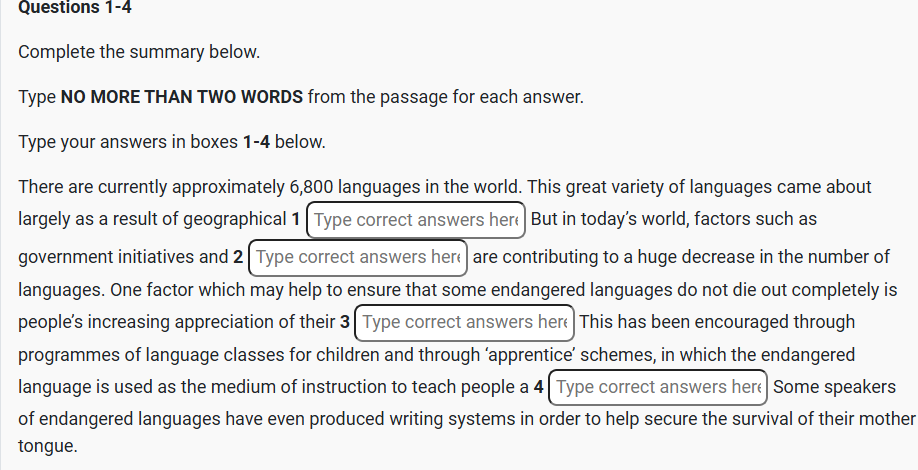
A. Q1 Two things distinguish food production from all other productive activities: first, every single person needs food each day and has a right to it; and second, it is hugely dependent on nature. These two unique aspects, one political, the other natural, make food production highly vulnerable and different from any other business. At the same time, cultural values are highly entrenched in food and agricultural systems worldwide.

B. Farmers everywhere face major risks; including extreme weather, long-term climate change, and price volatility in input and product markets. However, Q2 smallholder farmers in developing countries must in addition deal with adverse environments, both natural, in terms of soil quality, rainfall, etc. and human, in terms of infrastructure, financial systems, markets, knowledge, and technology. Counter-intuitively, hunger is prevalent among many smallholder farmers in the developing world.

C. Participants in the online debate argued that our biggest challenge is to address the underlying causes of the agricultural system’s inability to ensure sufficient food for all, and they identified as drivers of this problem our dependency on fossil fuels and unsupportive government policies.

D. On the question of mitigating the risks farmers face, most essayists called for greater state intervention. In his essay, Kanayo F. Nwanze, President of the International Fund for Agricultural Development, argued that Q9 governments can significantly reduce risks for farmers by providing basic services like roads to get produce more efficiently to markets, or water and food storage facilities to reduce losses. Sophia Murphy, senior advisor to the Institute for Agriculture and Trade Policy, suggested that Q8 the procurement and holding of stocks by governments can also help mitigate wild swings in food prices by alleviating uncertainties about market supply.

E. Shenggen Fan, Director General of the International Food Policy Research Institute, held up social safety nets and public welfare programmes in Ethiopia, Brazil, and Mexico as valuable ways to Q6 address poverty among farming families and reduce their vulnerability to agriculture shocks. However, some commentators responded that cash transfers to poor families do not necessarily translate into increased food security, as these programmes do not always strengthen food production or raise incomes. Regarding state subsidies for agriculture, Rokeya Kabir, Executive Director of Bangladesh Nari Progati Sangha, commented in her essay that these ‘have not compensated for the stranglehold exercised by private traders. In fact, studies show that Q4 sixty percent of beneficiaries of subsidies are not poor, but rich landowners and non-farmer traders.

F. Nwanze, Murphy, and Fan argued that private risk management tools, like private insurance, commodity futures markets, and rural finance can help small-scale producers mitigate risk and allow for investment in improvements. Kabir warned that financial support schemes often encourage the adoption of high-input agricultural practices, which in the medium term may raise production costs beyond the value of their harvests. Murphy noted that when futures markets become excessively financialised they can contribute to short-term price volatility, which increases farmers’ food insecurity. Many participants and commentators emphasised that greater transparency in markets is needed to mitigate the impact of volatility and make evident whether adequate stocks and supplies are available. Others contended that agribusiness companies should be held responsible for paying for negative side effects.

G. Many essayists mentioned Q10 climate change and its consequences for small-scale agriculture. Fan explained that in addition to reducing crop yields, climate change increases the magnitude and the frequency of extreme weather events, which increase smallholder vulnerability. The growing unpredictability of weather patterns increases farmers’ difficulty in managing weather-related risks. According to this author, one solution would be to develop crop varieties that are more resilient to new climate trends and extreme weather patterns. Accordingly, Pat Mooney, co-founder and executive director of the ETC Group, suggested that ‘if we are to survive climate change, we must adopt policies that let peasants diversify the plant and animal species and varieties/breeds that make up our menus.

H. Some participating authors and commentators argued in favour of community-based and autonomous risk management strategies through collective action groups, co-operatives, or producers’ groups. Such groups enhance market opportunities for small-scale producers, reduce marketing costs, and synchronise buying and selling with seasonal price conditions. According to Murphy, ‘Q5 collective action offers an important way for farmers to strengthen their political and economic bargaining power, and to reduce their business risks. One commentator, Giel Ton, warned that collective action does not come as a free good. Q3 It takes time, effort, and money to organise, build trust, and to experiment. Others, like Marcel Vernooij and Marcel Beukeboom, suggested that in order to ‘apply what we already know’, Q12 all stakeholders, including business, government, scientists, and civil society, must work together, starting at the beginning of the value chain.

I. Some participants explained that market price volatility is often worsened by Q11 the presence of intermediary purchasers who, taking advantage of farmers’ vulnerability, dictate prices. One commentator suggested farmers can gain greater control over prices and minimise price volatility by selling directly to consumers. Similarly, Sonali Bisht, founder, and advisor to the Institute of Himalayan Environmental Research and Education (INHERE), India, wrote that Q7 community-supported agriculture, where consumers invest in local farmers by subscription and guarantee producers a fair price, is a risk-sharing model worth more attention. Direct food distribution systems not only encourage small-scale agriculture but also give consumers more control over the food they consume, she wrote.


Boost Your Score: Practice IELTS Online with IELTS Simulator.

phone icon
8439000086
8439000087
7055710003
7055710004
IELTS Simulation 323 GMS Road, Near Ballupur Chowk, Dehradun, India

Chat on WhatsApp
email: info at ieltsband7.com

IELTS READING – Why companies should welcome disorder S19AT3

IELTS SIMULATOR ACADEMIC ONLINE READING – Why companies should welcome disorder S19AT3 FREE COMUPTER DELIVERED ONLINE IELTS SIMULATION TEST

IELTS Reading Why companies should welcome disorder reading practice test has 10 questions belongs to Business & Organizational Management  subject..

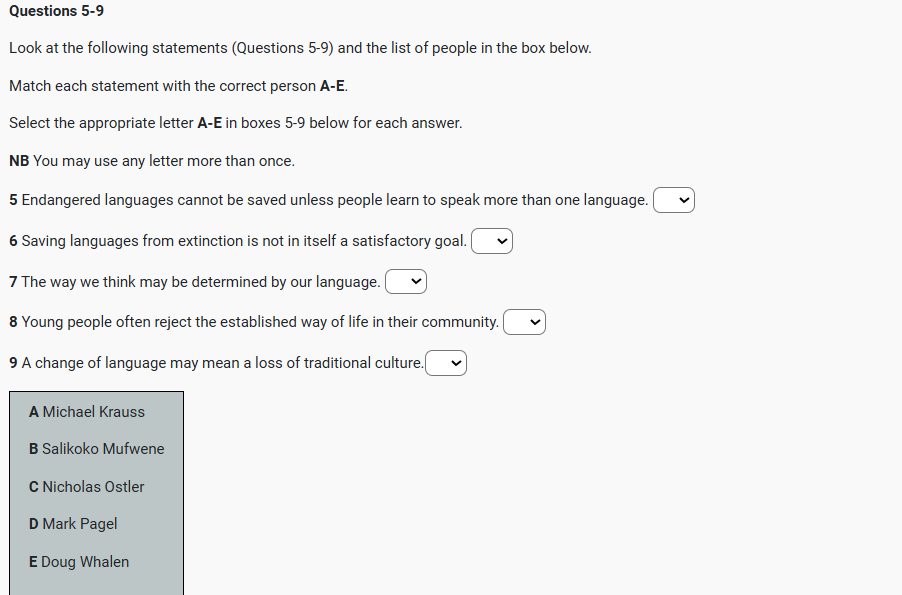
A. Organisation is big business. Whether it is of our lives – all those inboxes and calendars – or how companies are structured, a multi-billion dollar industry helps to meet this need. We have more strategies for time management,


project management and self-organisation than at any other time in human history. Q27 We are told that we ought to organise our company, our home life, our week, our day, and even our sleep, all as a means to becoming more Q35 productive. Every week, countless seminars and workshops take place around the world to tell a paying public that they ought to structure their lives in order to achieve this. This rhetoric has also crept into the thinking of business leaders and entrepreneurs, much to the delight of self-proclaimed Q36 perfectionists with the need to get everything right. The number of business schools and graduates has massively increased over the past 50 years, essentially teaching people how to organise well.

B. Q28 Ironically, however, the number of businesses that fail has also steadily increased. Work-related stress has increased. A large proportion of workers from all demographics claim to be Q37 dissatisfied with the way their work is structured and the way they are managed. This begs the question: what has gone wrong? Why is it that on paper the drive for organisation seems a sure shot for increasing productivity, but in reality falls well short of what is expected?

C. This has been a problem for a while now. Frederick Taylor was one of the forefathers of scientific management. Q29 Writing in the first half of the 20th century, he designed a number of principles to improve the efficiency of the work process, which have since become widespread in modern companies. So the approach has been around for a while.

D. Q30 New research suggests that this obsession with efficiency is misguided. The problem is not necessarily the management theories or strategies we use to organise our work; it’s the basic assumptions we hold in approaching how we work. Here it’s the assumption that order is a necessary condition for productivity. This assumption has also fostered the idea that disorder must be detrimental to organisational productivity. Q38 The result is that businesses and people spend time and money organising themselves for the sake of organising, rather than actually looking at the end goal and usefulness of such an effort.

E. Q31 What’s more, recent studies show that order actually has diminishing returns. Order does increase productivity to a certain extent, but eventually the usefulness of the process of organisation, and the benefit it yields, reduce until the point where any further increase in order reduces productivity. Some argue that in a business, if the cost of formally structuring something outweighs the benefit of doing it, then that thing ought not to be formally structured. Instead, the resources involved can be better used elsewhere.

F. Q39 In fact, research shows that, when innovating, the best approach is to create an environment devoid of structure and hierarchy and enable everyone involved to engage as one organic groupQ32 These environments can lead to new solutions that, under conventionally structured environments (filled with bottlenecks in terms of information flow, power structures, rules, and routines) would never be reached.

G. In recent times companies have slowly started to embrace this disorganisation. Many of them embrace it in terms of perception (embracing the idea of disorder, as opposed to fearing it) and in terms of process (putting mechanisms in place to reduce structure). For example, Q33 Oticon, a large Danish manufacturer of hearing aids, used what it called a ‘spaghetti’ structure in order to reduce the organisation’s rigid hierarchies. This involved scrapping formal job titles and giving staff huge amounts of ownership over their own time and projects. This approach proved to be highly successful initially, with clear improvements in worker productivity in all facets of the business. In similar fashion, the former chairman of General Electric embraced disorganisation, putting forward the idea of the ‘boundaryless’ organisation. Again, it involves breaking down the barriers between different parts of a company and encouraging virtual collaboration and flexible working. Q40 Google and a number of other tech companies have embraced (at least in part) these kinds of flexible structures, facilitated by technology and strong company values which glue people together.

H. A word of warning to others thinking of jumping on this bandwagon: the evidence so far suggests disorder, much like order, also seems to have diminishing utility, and can also have detrimental effects on performance if overused. Like order, disorder should be embraced only so far as it is useful. But we should not fear it – nor venerate one over the other. Q34 This research also shows that we should continually question whether or not our existing assumptions work.


Prepare for IELTS IELTS Test International Experienced Teacher Best Training By CELTA Trainer. Best Results Easily Get Required Score IELTS Exam Dates Available, Small Batch Size with Flexible Time, Professional.

phone icon
8439000086
8439000087
7055710003
7055710004
IELTS Simulation 323 GMS Road, Near Ballupur Chowk, Dehradun, India
Chat on WhatsApp
email: info at ieltsband7.com

IELTS READING – Chelsea Rochman S21AT3

IELTS SIMULATOR  FREE ACADEMIC ONLINE  READING – Chelsea Rochman S21AT3 FREE COMPUTER DELIVERED ONLINE TEST IELTS SIMULATION
IELTS Reading Chelsea Rochman reading practice test has 10 questions belongs to 🌊 Environment & Marine Science subject..

Chelsea Rochman, an ecologist at the University of California, Davis, has been trying to answer a dismal question: Is everything terrible, or are things just very, very bad?

Rochman is a member of the National Center for Ecological Analysis and Synthesis’s marine-debris working group,

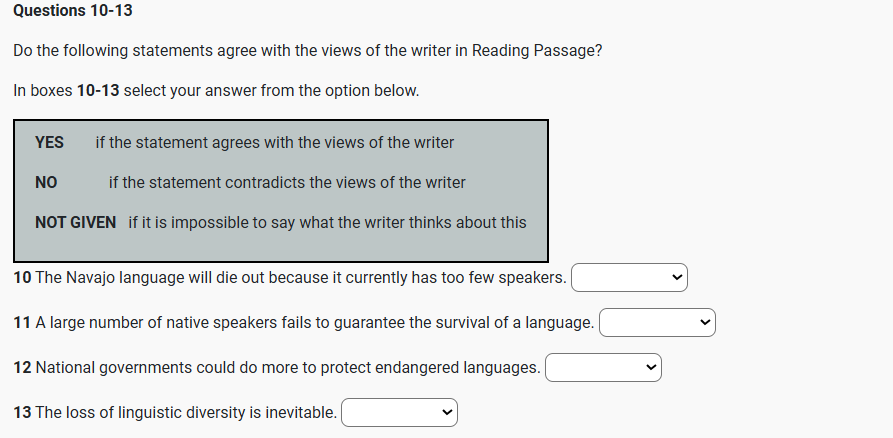
a collection of scientists who study, among other things, the growing problem of marine debris, also known as ocean trash. Q27 Plenty of studies have sounded alarm bells about the state of marine debris; in a recent paper published in the journal Ecology, Rochman and her colleagues set out to determine how many of those perceived risks are real.

Often, Rochman says, scientists will end a paper by speculating about the broader impacts of what they’ve found. Q28&29 For example, a study could show that certain seabirds eat plastic bags, and go on to warn that whole bird populations are at risk of dying out.’But the truth was that nobody had yet tested those perceived threats,’ Rochman says.’There wasn’t a lot of information.’

Q30 Rochman and her colleagues examined more than a hundred papers on the impacts of marine debris that were published through 2013. Within each paper, they asked what threats scientists had studied – 366 perceived threats in all – and what they’d actually found.

Q31 In 83 percent of cases, the perceived dangers of ocean trash were proven true. In the remaining cases, the working group found the studies had weaknesses in design and content which affected the validity of their conclusions – they lacked a control group, for example, or used faulty statistics.

Q32 Strikingly, Rochman says, only one well-designed study failed to find the effect it was looking for, an investigation of mussels ingesting microscopic plastic bits. The plastic moved from the mussels’ stomachs to their bloodstreams, scientists found, and stayed there for weeks – but didn’t seem to stress out the shellfish.

While mussels may be fine eating trash, though, the analysis also gave a clearer picture of the many ways that ocean debris is bothersome.

Within the studies they looked at, Q33 most of the proven threats came from plastic debris, rather than other materials like metal or wood. Most of the dangers also involved Q34 large pieces of debris – animals getting entangled in trash, for example, or eating it and severely injuring themselves.

Q35 But a lot of ocean debris is ‘microplastic’, or pieces smaller than five millimeters. These may be ingredients used in cosmetics and toiletries, fibers shed by synthetic clothing in the wash or eroded remnants of larger debris. Compared to the number of studies investigating large-scale debris, Rochman’s group found little research on the effects of these tiny bits. ‘There are a lot of open questions still for microplastic,’ Rochman says, though she notes that more papers on the subject have been published since 2013, the cutoff point for the group’s analysis.

There are also, she adds, a lot of open questions about the ways that ocean debris can lead to sea-creature death. Many studies have looked at how plastic affects an individual animal, or that animal’s tissues or cells, rather than whole Q36 populations. And in the lab, scientists often use higher Q37 concentrations of plastic than what’s really in the ocean. None of that tells us how many birds or fish or sea turtles could die from plastic pollution – or how deaths in one species could affect that animal’s Q38 predators, or the rest of the ecosystem.

‘We need to be asking more ecologically relevant questions,’ Rochman says. Usually, scientists don’t know exactly how Q39 disasters such as a tanker accidentally spilling its whole cargo of oil and polluting huge areas of the ocean will affect the environment until after they’ve happened. ‘We don’t ask the right questions early enough,’ she says. But if ecologists can understand how the slow-moving effect of ocean trash is damaging ecosystems, they might be able to prevent things from getting worse.

Asking the right questions can help policy makers, and the public, figure out where to focus their attention. The problems that look or sound most dramatic may not be the best places to start. For example, the name of the ‘Great Pacific Garbage Patch’ – a collection of marine debris in the northern Pacific Ocean – might conjure up a vast, floating trash island. In reality though, much of the debris is tiny or below the surface; a person could sail through the area without seeing any trash at all. A Dutch group called ‘The Ocean Cleanup’ is currently working on plans to put mechanical devices in the Pacific Garbage Patch and similar areas to suck up plastic. But a recent paper used simulations to show that strategically positioning the cleanup devices closer to shore would more effectively reduce pollution over the long term.

‘I think clearing up some of these misperceptions is really important,’ Rochman says. Among scientists as well as in the media, she says, ‘A lot of the images about strandings and entanglement and all of that cause the perception that plastic debris is killing everything in the ocean.’ Interrogating the existing scientific literature can help ecologists figure out which problems really need addressing, and which ones they’d be better off- like the mussels – absorbing and ignoring.


Boost Your Score: Practice IELTS Online with IELTS Simulator.

phone icon
8439000086
8439000087
7055710003
7055710004
IELTS Simulation 323 GMS Road, Near Ballupur Chowk, Dehradun, India
Chat on WhatsApp
email: info at ieltsband7.com

IELTS READING – Why zoos are good S21AT2


IELTS SIMULATOR FREE ACADEMIC READING – Why zoos are good S21AT2 FREE COMPUTER DELIVERED ACADEMIC ONLINE TEST IELTS SIMULATION

 IELTS Reading Why zoos are good reading practice test has 10 questions belongs to 🐾 Environment & Animal Conservation subject..

Scientist David Hone makes the case for zoos

A. In my view, Q18 it is perfectly possible for many species of animals living in zoos or wildlife parks to have a quality of life as high as, or higher than, in the wildQ17 Animals in good zoos get a varied and high-quality diet with all the supplements required,

and any illnesses they might have will be treated. Their movement might be somewhat restricted, but they have a safe environment in which to live, and they are spared bullying and social ostracism by others of their kind. They do not suffer from the threat or stress of predators, or the irritation and pain of parasites or injuries. The average captive animal will have a greater life expectancy compared with its wild counterpart, and will not die of drought, of starvation or in the jaws of a predator. A lot of very nasty things happen to truly ‘wild’ animals that simply don’t happen in good zoos, and to view a life that is ‘free’ as one that is automatically ‘good’ is, I think, an error. Furthermore, zoos serve several key purposes.

B. Firstly, zoos aid conservation. Q14 Colossal numbers of species are becoming extinct across the world, and many more are increasingly threatened and therefore risk extinction. Moreover, some of these collapses have been sudden, dramatic and unexpected, or were simply discovered very late in the day. A species protected in captivity can be bred up to provide a reservoir population against a population crash or extinction in the wild. Q19 A good number of species only exist in captivity, with many of these living in zoos. Still more only exist in the wild because they have been reintroduced from zoos, or have wild populations that have been boosted by captive bred animals. Without these efforts there would be fewer species alive today. Although reintroduction successes are few and far between, the numbers are increasing, and the very fact that species have been saved or reintroduced as a result of captive breeding proves the value of such initiatives.

C. Zoos also provide education. Many children and adults, especially those in cities, will never see a wild animal beyond a fox or pigeon. Q20 While it is true that Q16 television documentaries are becoming ever more detailed and impressive, and many natural history specimens are on display in museums, there really is nothing to compare with seeing a living creature in the flesh, hearing it, smelling it, watching what it does and having the time to absorb details. That alone will bring a greater understanding and perspective to many, and hopefully give them a greater appreciation for wildlife, conservation efforts, and how they can contribute.

D. In addition to this, Q21 there is also the education that can take place in zoos through signs, talks, and presentations which directly communicate information to visitors about the animals they are seeing and their place in the world. This was an area where zoos used to be lacking, but they are now increasingly sophisticated in their communication and outreach work. Q23&24 Many zoos also work directly to educate conservation workers in other countries or send their animal keepers abroad to contribute their knowledge and skills to those working in zoos and reserves, thereby helping to improve conditions and reintroductions all over the world.

E. Zoos also play a key role in research. If we are to save wild species and restore and repair ecosystems we need to know about how key species live, act, and react. Q15 Being able to undertake research on animals in zoos where there is less risk and fewer variables means real changes can be effected on wild populations. Finding out about, for example, the oestrus cycle of an animal or its breeding rate helps us manage wild populations. Procedures such as capturing and moving at-risk or dangerous individuals are bolstered by knowledge gained in zoos about doses for anaesthetics, and by experience in handling and transporting animals. This can make a real difference to conservation efforts and to the reduction of human-animal conflicts and can provide a knowledge base for helping with the increasing threats of habitat destruction and other problems.

F. In conclusion, considering the many ongoing global threats to the environment, it is hard for me to see zoos as anything other than essential to the long-term survival of numerous species. Q25&26 They are vital not just in terms of protecting animals, but as a means of learning about them to aid those still in the wild, as well as educating and informing the general population about these animals and their world so that they can assist or at least accept the need to be more environmentally conscious. Without them, the world would be, and would increasingly become, a much poorer place.


 Easily Get Required Score I am interested in IELTS Pass with Confidence, Dehradun Small Batch Size with Flexible Time, professional faculty.

phone icon
8439000086
8439000087
7055710003
7055710004
IELTS Simulation 323 GMS Road, Near Ballupur Chowk, Dehradun, India
Chat on WhatsApp
email: info at ieltsband7.com