IELTS READING – Information Theory the big idea S47AT3

 IELTS Reading Information Theory – the big idea reading practice test has 10 questions belongs to Computer Science & Communication Technology subject..

Information theory lies at the heart of everything – from DVD players and the genetic code of DNA to the physics of the universe at its most fundamental. it has been central to the development of the science of communication, which enables data to be sent electronically and has therefore had a major impact on our lives.

A. Q31 In April 2002 an event took place which demonstrated one of the many applications of information theory. The space probe, Voyager I, launched in 1977, had sent back spectacular images of Q33 Jupiter and Saturn and then soared out of the Q34 Solar System on a one-way mission to the stars. After 25 years of exposure to the freezing temperatures of deep space, the probe was beginning to show its age, Q35 Sensors and circuits were on the brink of failing and NASA experts realized that they had to do something or lose contact with their probe forever. The solution was to get a message to Voyager I to instruct it to use Q36 spares to change the failing parts. With the probe 12 billion kilometers from Earth, this was not an easy task. By means of a Q37 radio dish belonging to NASA’s Deep Space Network, the message was sent out into the depths of space. Even travelling at the speed of light, it took over II hours to reach its target, far beyond the orbit of Pluto. Yet, incredibly, the little probe managed to hear the faint call from its home planet, and successfully made the switchover.


B. It was the Ingest·distance repair job in history, and a triumph for the NASA engineers. But it also highlighted the astonishing power of the techniques developed by American communications engineer Claude Shannon, who had died just a year earlier. Born in 1916 in Petoskey, Michigan. Shannon showed an early talent for maths and for building gadgets, and made breakthroughs in the foundations of computer technology when still a student. While at Bell laboratories, Shannon developed information theory, but Q29 shunned the resulting acclaim. In the 1940s. he single-handedly created an entire science of communication which has since inveigled its way into a host of applications, from DVDs to satellite communication to bar codes – any area, in short, where data has to be conveyed rapidly yet accurately.

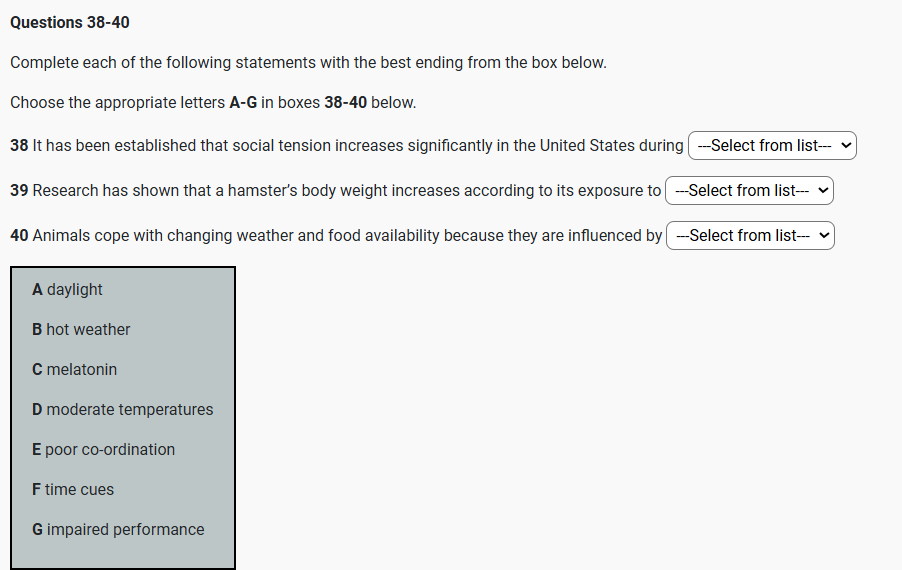
C. This all seems light years away from the down-to-earth uses Shannon originally had for his work, which began when he was a 22-year—old graduate engineering student at the prestigious Massachusetts Institute of Technology in 1939. Q32 He set out with an apparently simple aim: to pin down the precise meaning of the concept of ‘information’. The most basic form of information, Shannon argued, is whether something is true or false – which can be captured in the binary unit, or ‘bit’, of the form 1 or 0. Q38 Having identified this fundamental unit, Shannon set about defining otherwise vague ideas about information and how to transmit it from place to place. ln the process he discovered something surprising: it is always possible to guarantee information will gel through random interference – ‘noise’ — intact.

D. Noise usually means unwanted sounds which interfere with genuine information. information theory generalizes this idea via theorems that capture the effects of noise with mathematical precision. In particular, Shannon showed that Q27 noise sets a limit on the rate at which information can pass along communication channels while remaining error-freeQ39 This rate depends on the relative strengths of the signal and noise travelling down the communication channel, and on its capacity (its’ bandwidth’). The resulting limit, given in units of bits per second, is the absolute maximum rate of error-free communication given signal strength and noise level. The trick, Shannon showed, is to find ways of packaging up – ‘coding’ – information to cope with the ravages of noise, while staying within the information carrying capacity ‘bandwidth’ – of the communication system being used.

E. Over the years scientists have devised many such coding methods, and they have proved crucial in many technological feats. The Voyager spacecraft transmitted data using codes which added one extra bit for every single bit of information; the result was an error rate of just one bit in 10,000 — and stunningly clear pictures of the planets. Other codes have become parts of everyday life – such as the Universal Product Code, or bar code, which Q30 uses a simple error-detecting system that ensures supermarket check-out lasers can read the price even on. say, a crumpled bag of crisps. Q40 As recently as 1993, engineers made a major breakthrough by discovering so-called turbo codes – which come very close to Shannon’s ultimate limit for the maximum rate that data can be transmitted reliably, and now play a key role in the mobile videophone revolution.

F. Shannon also laid the foundations of more efficient ways of storing information, Q28 by stripping out superfluous (‘redundant’) bits from data which contributed little real information. As mobile phone text messages like ‘l CN C U’ show, it is often possible to leave out a lot of data without losing much meaning, As with error correction, however, there’s a limit beyond which messages become too ambiguous. Shannon showed how to calculate this limit, opening the way to the design of compression methods that cram maximum information into the minimum space.


Learn From Experienced Teacher Best IELTS Coaching Dehradun Best IELTS in Dehradun Uttarakhand GMS Road BEST coaching in Dehradun Apply for Class Courses Today Good Results.

phone icon
8439000086
8439000087
7055710003
7055710004
IELTS Simulation 323 GMS Road, Near Ballupur Chowk, Dehradun, India

Chat on WhatsApp
email: info at ieltsband7.com

IELTS READING – Tidal Power S47AT2

IELTS Reading Tidal Power reading practice test has 10 questions belongs to Environmental Science & Renewable Energy subject..

Undersea turbines which produce electricity from the tides are set to become an important source of renewable energy for Britain. It is still too early to predict the extent of the impact they may have. but all the signs are that they will play a significant role in the future.

A. Operating on the same principle as wind turbines, the power in sea turbines comes from tidal currents which turn blades similar to ships’ propellers, but, unlike the wind, Q18 the tides are predictable and the power input is constant. The technology raises the prospect of Britain becoming self-sufficient in renewable energy and Q19 drastically reducing its carbon dioxide emissions, if tide, wind, and wave power are all developed. Britain would be able to Q20 close gas, coal and nuclear power plants and Q21 export renewable power to other parts of Europe. Q16 Unlike wind power which Britain originally developed and then abandoned for 20 years allowing the Dutch to make it a major industry, undersea turbines could become a big export earner to island nations such as Japan and New Zealand.

B. Tidal sites have already been identified that will produce one-sixth or more of the UK’s power – and at prices competitive with modern gas turbines and undercutting those of the already ailing nuclear industry. One site alone, the Pentland Firth, between Orkney and mainland Scotland, could produce 10% of the country’s electricity with banks of turbines under the sea, and another at Alderney in the Channel islands three times the 1,200 megawatts of Britain’s largest and newest nuclear plant, Sizewell B, in Suffolk. Other sites identified include the Bristol Channel and the west coast of Scotland, particularly the channel between Campbeltown and Northern Ireland.

C. Work on designs for the new turbine blades and sites are well advanced at the University of Southampton’s sustainable energy research group. Q14 The first station is expected to be installed off Lynmouth in Devon shortly to test the technology in a venture jointly funded by the department of Trade and Industry and the European Union. AbuBakr Bahaj, in charge of the Southampton research. said: The prospects for energy from tidal currents are far better than from wind because the flows of water are predictable and constant. Q17 The technology for dealing with the hostile saline environment under the sea has been developed in the North Sea oil industry and much is already known about turbine blade design, because of wind power and ship propellers. There are a few technical difficulties, but I believe in the next nine to ten years we will be installing commercial marine turbine farms.’ Southampton has been awarded £215,000 over three years to develop the turbines and is working with Marine Current Turbines. a subsidiary of IT power; on the Lynmouth project. EU research has now identified 106 potential sites for tidal power, 80% round the coasts of Britain. Q22 The best sites are between islands or around heavily indented coasts where there are strong tidal currents.

D. A marine turbine blade needs to be only one-third of the size of a wind generator to produce three times as much power. The blades will be about 20 metres in diameter so around 30 metres of water is required. Unlike wind power, there are unlikely to be environmental objections. Fish and other creatures are thought unlikely to be at risk from the relatively Q24 slow turning blades. Each turbine will be mounted on a tower which will connect to the national power supply grid via underwater cables. The towers will stick out of the water and be lit. to warn shipping, and also be designed to be lifted out of the water for Q23 maintenance and to clean seaweed from the blades.

E. Dr Bahaj has done most work on the Alderney site, where there are powerful currents. Q15 The single undersea turbine farm would produce far more power than needed for the Channel Islands and most would be fed into the French Grid and be re-imported into Britain via the cable under the Channel.

F. One technical difficulty is Q26 cavitation, where Q25 low pressure behind a turning blade causes air bubbles. These can cause vibration and damage the blades of the turbines. Dr Bahaj said: ‘We have to test a number of blade types to avoid this happening or at least make sure it does not damage the turbines or reduce performance. Another slight concern is submerged debris floating into the blades. So far we do not know how much of a problem it might be. We will have to make the turbines robust because the sea is a hostile environment. but all the signs that we can do it are good.


Easily Get Required Score I am interested in IELTS Pass with Confidence, Dehradun Small Batch Size with Flexible Time, professional faculty.

phone icon
8439000086
8439000087
7055710003
7055710004
IELTS Simulation 323 GMS Road, Near Ballupur Chowk, Dehradun, India
Chat on WhatsApp
email: info at ieltsband7.com

IELTS READING – Attitudes to Language S47AT1

 IELTS Reading Attitudes to Language reading practice test has 10 questions belongs to Language & Communication subject..

It is not easy to be systematic and objective about language study. Popular linguistic debate regularly deteriorates into invective and polemic. Language belongs to everyone, so most people feel they have a right to hold an opinion about it And Q1 when opinions differ, emotions can run highQ2 Arguments can start as easily over minor points of usage as over major policies of linguistic education.


Language, more oven is a very public behavior so it is easy for different usages to be noted and criticized No part of society or social behavior is exempt: Q3 linguistic factors influence how we judge personality, intelligence, social status, educational standards, job aptitude, and many other areas of identity and social survival. As a result, it is easy to hurt, and to be hurt, when language use is unfeelingly attacked.

ln its most general sense Q9 prescriptivism is the view that one variety of language has an inherently higher value than others, and that this ought to be imposed on the whole of the speech community. The view is propounded especially in relation to grammar and vocabulary, and frequently with reference to pronunciation. The variety which ls favoured, in this account, ls usually a version of the ‘standard’ written language, especially as encountered in literature, or in the formal spoken language which most closely reflects this style. Adherents to this variety are said to speak or write ‘correctly’; deviations from it are said to be ‘incorrect`.

All the main languages have been studied prescriptively, especially in the 18th-century approach to the writing of grammars and dictionaries. The aims of these early grammarians were threefold: [a) they wanted to codify the principles of their languages, to show that there was a system beneath the apparent chaos of usage. (b] they wanted a means of settling disputes over usage, and (c] they wanted to point out what they felt to be common errors, in order to ‘improve’ the language. The authoritarian nature of the approach is best characterized by its reliance on ‘Q10 rules’ of grammar Some usages are prescribed; to be learnt and followed accurately; others are prescribed to be avoided. ln this early period, there were no half-measures: usage was either right or wrong. and it was the task of the grammarian not simply to record alliterative but to pronounce judgement upon them.

Q5 These attitudes are still with us, and they motivate a widespread concern that linguistic standards should be maintained. Nevertheless, there is an alternative point of view that is concerned less with standards than with the facts of linguistic usage. This approach ls summarized in the statement that it is the task of the grammarian to describe not prescribe to record the facts of linguistic diversity, and not to attempt Q6 the impossible tasks evaluating language variation or halting language changeQ7 In the second half of the 18th century, we already find advocates of this view, such as Joseph Priestley, whose Rudiments of English Grammar (1761) insists that ‘Q12 the custom of speaking is the original and only just standard of any language. `Linguistic issues, it is argued, cannot be solved by logic and legislation. And this view has become the tenet of the modem linguistic approach to grammatical analysis.

Q8 In our own time, the opposition between ‘Q11 descriptivists’ and ‘prescriptivists’ has often become extreme. with both sides painting unreal pictures of the other. Descriptive grammarians have been presented as people who do not care about standards, because of the way they see all forms of usage as equally valid. Prescriptive grammarians have been presented as blind adherents to a historical tradition. The opposition has even been presented in quasi-political terms – of radical liberalism vs elitist conservatism.


Boost Your Score: Practice IELTS Online with IELTS Simulator.

phone icon
8439000086
8439000087
7055710003
7055710004
IELTS Simulation 323 GMS Road, Near Ballupur Chowk, Dehradun, India
Chat on WhatsApp
email: info at ieltsband7.com

IELTS READING – A Neuroscientist Reveals How to Think Differently S46AT3

 IELTS Reading A Neuroscientist Reveals How to Think Differently reading practice test has 10 questions belongs to Psychology & Neuroscience subject..

In the last decade, a revolution has occurred in the way that scientists think about the brain. We now know that the decisions humans make can be traced to the firing patterns of neurons in specific parts of the brain. Q27 These discoveries have led to the field known as neuroeconomics, which studies the brain’s secrets to success in an economic environment that demands innovation and being able to do things differently from competitors. A brain that can do this is an iconoclastic one. Briefly, an iconoclast is a person who does something that others say can’t be done.

This definition implies that iconoclasts are different from other people, but more precisely, Q28 it is their brains that are different in three distinct ways: perception, fear response, and social intelligence. Each of these three functions utilizes a different circuit in the brain. Naysayers might suggest that the brain is irrelevant, that thinking in an original, even revolutionary way is more a matter of personality than brain function. But the held of neuroeconomics was born out of the realization that the physical workings of the brain place limitations on the way we make decisions. By understanding these constraints, we begin to understand why some people march to a different drumbeat.

The first thing to realize is that the brain suffers from limited resources. It has a fixed energy budget, about the same as a 40 watt light bulb, so it has evolved to work as efficiently as possible. This is where most people are impeded from being an iconoclast. For example, when confronted with information streaming from the eyes, the brain will interpret this information in the quickest way possible. Thus Q29 it will draw on both past experience and any other source of information, such as what other people say, to make sense of what it is seeing. This happens all the time. The brain takes shortcuts that work so well we are hardly ever aware of them. We think our perceptions of the world are real, but they are only biological and electrical rumblings. Perception is not simply a product of what your eyes or ears transmit to your brain. More than the physical reality of photons or sound waves, Q30 perception is a product of the brain.

Perception is central to iconoclasm. Iconoclasts see things differently to other people. Q31 Their brains do not fall into efficiency pitfalls as much as the average person’s brain. iconoclasts, either because they were born that way or through learning, have found ways to work around the perceptual shortcuts that plague most people. Perception is not something that is hardwired into the brain. It is a learned process, which is both a curse and an opportunity for change. The brain faces the fundamental problem of interpreting physical stimuli from the senses.

Everything the brain sees, hears, or touches has multiple interpretations. The one that is ultimately chosen is simply the brain’s best theory. In technical terms, these conjectures have their basis in the statistical likelihood of one interpretation over another and are heavily influenced by past experience and, importantly for potential iconoclasts what other people say.

The best way to see things differently to other people is to bombard the brain with things it has never encountered before. Q32 Novelty releases the perceptual process from the chains of past experience and forces the brain to make new judgments. Q33 Successful iconoclasts have an extraordinary willingness to be exposed to what is fresh and different. Observation of iconoclasts shows that they embrace novelty while most people avoid things that are different.

The problem with novelty, however, is that lt tends to trigger the brain’s fear system. Fear is a major impediment to thinking like an iconoclast and stops the average person in his tracks. There are many types of fear, but the two that inhibit iconoclastic thinking and people generally find difficult to deal with are fear of uncertainty and fear of public ridicule. These may seem like trivial phobias. Q37 But fear of public speaking, which everyone must do from time to time, afflicts one-third of the population. This makes it too common to be considered a mental disorderQ35 It is simply a common variant of human nature, one which iconoclasts do not let inhibit their reactions

Finally, to be successful iconoclasts, individuals must sell their ideas to other people. This is where social intelligence comes in. Social intelligence is the ability to understand and manage people in a business setting. Q39 In the last decade, there has been an explosion of knowledge about the social brain and how the brain works when groups coordinate decision making. Neuroscience has revealed which brain circuits are responsible for functions like understanding what other people think, empathy, fairness, and social identity. These brain regions play key roles in whether people convince others of their ideas. Perception is important in social cognition too. The perception of someone’s enthusiasm, or reputation, can make or break a deal. Q38 Understanding how perception becomes intertwined with social decision making shows why successful iconoclasts are so rare.

Q40 Iconoclasts create new opportunities in every area from artistic expression to technology to business They supply creativity and innovation not easily accomplished by committees. Rules aren’t important to them. Iconoclasts face alienation and failure, but can also be a major asset to any organization. It is crucial for success in any field to understand how the iconoclastic mind works.


Learn From Experienced Teacher Best IELTS Coaching Dehradun Best IELTS in Dehradun Uttarakhand GMS Road BEST coaching in Dehradun Apply for Class Courses Today Good Results.

phone icon
8439000086
8439000087
7055710003
7055710004
IELTS Simulation 323 GMS Road, Near Ballupur Chowk, Dehradun, India
Chat on WhatsApp
email: info at ieltsband7.com