IELTS READING – William Henry Perkin S45AT1

 IELTS Reading William Henry Perkin reading practice test has 10 questions belongs to History of Science & Chemistry subject..

The man who invented synthetic dyes

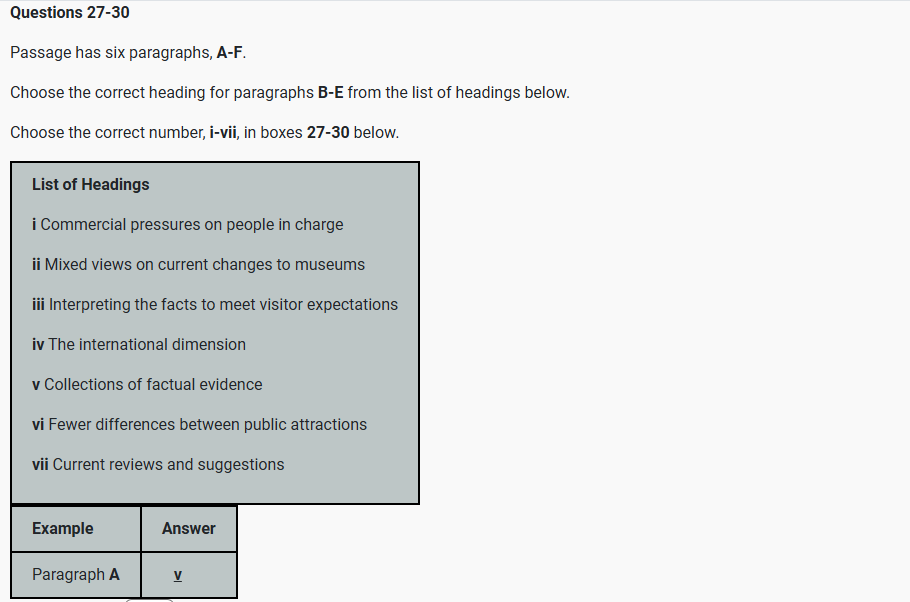
William Henry Perkin was born on March 12, 1838, in London, England. As a boy, Perkin’s curiosity prompted early interests in the arts, sciences. photography, and engineering. But it was a chance stumbling upon a run-down, yet functional, laboratory in his late grandfather’s home that solidified the young man`s enthusiasm for chemistry.

As a student at the City of London School, Perkin became immersed in the study of chemistry. Q1 His talent and devotion to the subject were perceived by his teacher, Thomas Hall, who encouraged him to attend a series of lectures given by the eminent scientist Michael Faraday at the Royal Institution. Those speeches tired the young chemist`s enthusiasm further, and he later went on to attend the Royal College of Chemistry, which he succeeded in entering in 1853, at the age of 15.

At the time of Perkin’s enrollment, the Royal College of Chemistry was headed by the noted German chemist August Wilhelm Hofmann. Perkin’s scientific gifts soon caught Hofmann’s attention and within two years, Q3 he became Hofmann’s youngest assistantQ4 Not long after that, Perkin made the scientific breakthrough that would bring him both fame and fortune.

At the time, quinine was the only viable medical treatment for malaria. The drug is derived from the bark of the cinchona tree, native to South America and by 1856 demand for the drug was surpassing the available supply. Thus, when Hofmann made some passing comments about the desirability of a synthetic substitute for quinine, it was unsurprising that his star pupil was moved to take up the challenge.

During his vacation in 1856, Perkin spent his time in the laboratory on the top floor of his family’s house. Q6 He was attempting to manufacture quinine from aniline, an inexpensive and readily available coal tar waste product. Despite his best efforts, however, he did not end up with quinine. Instead, he produced a mysterious dark sludge. Luckily, Perkins scientific training and nature prompted him to investigate the substance further. Incorporating potassium dichromate and alcohol into the aniline at various stages of the experimental process, he finally produced a deep purple solution. And, proving the truth of the famous scientist Louis Pasteur’s words ‘chance favors only the prepared mind’. Perkin saw the potential of his unexpected find.

Historically, textile dyes were made from such natural sources as plants and animal excretions. Some of these, such as the glandular mucus of snails, were difficult to obtain and outrageously expensive. Indeed, the purple colour extracted from a snail was once so costly that in society at the time only the Q8 rich could afford it. Further, natural dyes tended to be muddy in hue and fade quickly. It was against this backdrop that Perkin’s discovery was made.

Perkin quickly grasped that his purple solution could be used to colour fabric, thus making it the world’s first synthetic dye. Realising the importance of this breakthrough, he lost no time in patenting it. But perhaps the most fascinating of all Perkin`s reactions to his find was his nearly instant recognition that the new dye had Q9 commercial possibilities.

Perkin originally named his dye Tyrian Purple, but it later became commonly known as Q10 mauve (from the French for the plant used to make the colour violet). He asked advice of Scottish dye works owner Q11 Robert Pullar, who assured him that manufacturing the dye would be well worth it if the colour remained fast (i.e. would not fade) and the cost was relatively low. So, over the fierce objections of his mentor Hofmann, he left college to give birth to the modern chemical industry.

With the help of his father and brother, Perkin set up a factory not far from London. Utilizing the cheap and plentiful coal tar that was an almost unlimited byproduct of London’s gas street lighting, the dye works began producing the world’s first synthetically dyed material in 1857. The company received a commercial boost from the Empress Eugenio of Q12 France when she decided the new color flattered her. Very soon, mauve was the necessary shade for all the fashionable ladies in that country. Not to be outdone, England`s Queen Victoria also appeared in public wearing a mauve gown, thus making it all the rage in England as well. The dye was bold and fast, and the public clamoured for more. Perkin went back to the drawing board.

Although Perkins fame was achieved and fortune assured by his first discovery, the chemist continued his research. Among other dyes he developed and introduced were aniline red (1859) and aniline black (1863) and in the late 1860s, Perkin’s green. It is important to note that Perkin’s synthetic dye discoveries had outcomes far beyond the merely decorative. The dyes also became vital to medical research in many ways. For instance, they were used to stain previously invisible microbes and bacteria, allowing researchers to identify such bacilli as tuberculosis. cholera, and anthrax. Artificial dyes continue to play a crucial role today. And, in what would have been particularly pleasing to Perkin, their current use is in the search for a vaccine against Q13 malaria.


Easily Get Required Score I am interested in IELTS Pass with Confidence, Dehradun Small Batch Size with Flexible Time, professional faculty.

phone icon
8439000086
8439000087
7055710003
7055710004
IELTS Simulation 323 GMS Road, Near Ballupur Chowk, Dehradun, India
Chat on WhatsApp
email: info at ieltsband7.com

IELTS READING – Collecting Ant Specimens S44AT3

IELTS Reading Collecting Ant Specimens reading practice test has 10 questions belongs to Entomology & Scientific Research Methods subject..

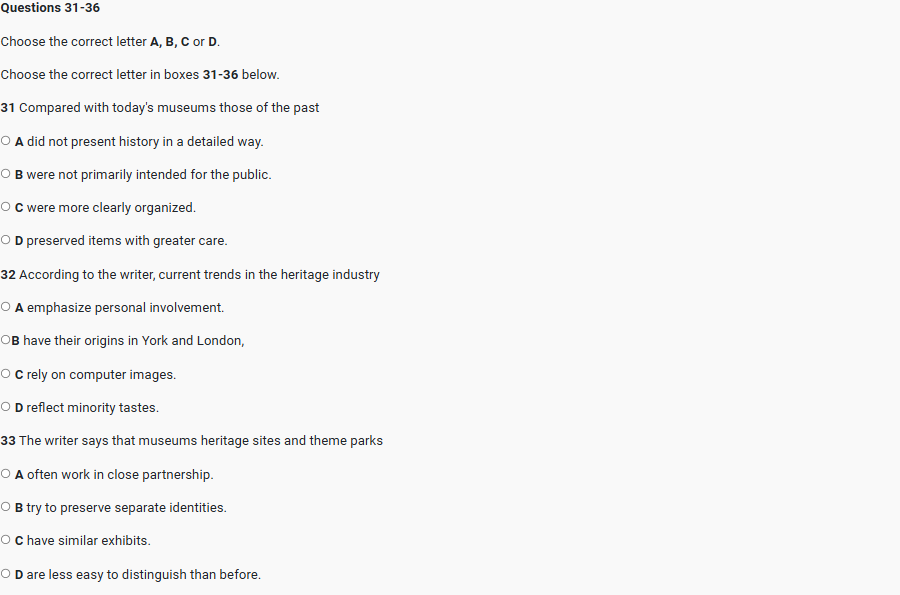
Collecting ants can be as simple as picking up stray ones and placing them in a glass jar, or as complicated as completing an exhaustive survey of all species present in an area and estimating their relative abundances. The exact method used will depend on the final purpose of the collections. Q27 For taxonomy, or classification, long series, from a single nest, which contain all castes (workers, including majors and minors, and, if present, queens and males) are desirable, to allow the determination of variation within species. Q29 For ecological studies, the most important factor is collecting identifiable samples of as many of the different species present as possible. Q30 Unfortunately, these methods are not always compatible. The taxonomist sometimes overlooks whole species in favour of those groups currently under study, while the ecologist often collects only a limited number of specimens of each species, thus reducing their value for taxonomic investigations.

To collect as wide a range of species as possible, several methods must be used. These include hand collecting, using baits to attract the ants, ground litter sampling, and the use of pitfall traps. Hand collecting consists of searching for ants everywhere they are likely to occur. This includes on the ground, under rocks, logs or other objects on the ground, in rotten wood on the ground or on trees, in vegetation, on tree trunks and under bark. Q31 When possible, collections should be made from nests or foraging columns and at least 20 to 25 individuals collected. This will ensure that all individuals are of the same species, and so increase their value for detailed studies. Since some species are largely nocturnal, collecting should not be confined to daytime. Specimens are collected using an aspirator (often called a pooter), forceps, a fine, moistened paint brush, or fingers, if the ants are known not to sting. Q35 Individual insects are placed in plastic or glass tubes (1.5-3-0 ml capacity for small ants, 5-8 ml for larger ants) containing 75% to 95% ethanol. Plastic tubes with secure tops are better than glass because they are lighter, and do not break as easily if mishandled.

Baits can be used to attract and concentrate foragers. Q33 This often increases the number of individuals collected and attracts species that are otherwise elusive. Sugars and meats or oils will attract different species and a range should be utilised. These baits can be placed either on the ground or on the trunks of trees or large shrubs. When placed on the ground, baits should be situated on small paper cards or other flat, light-coloured surfaces, or in test-tubes or vials. This makes it easier to spot ants and to capture them before they can escape into the surrounding Q38 leaf litter.

Many ants are small and forage primarily in the layer of leaves and other debris on the ground. Collecting these species by hand can be difficult. One of the most successful ways to collect them is to gather the leaf litter in which they are foraging and extract the ants from it. This is most commonly done by placing leaf litter on a Q39 screen over a large funnel, often under some Q37 heat. As the leaf litter dries from above, ants (and other animals) move downward and eventually fall out the bottom and are collected in Q40 alcohol placed below the funnel. Q32 This method works especially well in rain forests and marshy areas. A method of improving the catch when using a funnel is to sift the leaf litter through a coarse screen before placing it above the funnel. This will concentrate the litter and remove larger leaves and twigs. It will also allow more litter to be sampled when using a limited number of funnels.

The pitfall trap is another commonly used tool for collecting ants. A pitfall trap can be any small container placed in the ground with the top level with the surrounding surface and filled with a preservative. Ants are collected when they fall into the trap while foraging.

The diameter of the traps can vary from about 18 mm to 10 cm and the number used can vary from a few to several hundred. The size of the traps used is influenced largely by personal preference (although larger sizes are generally better), while the number will be determined by the study being undertaken. Q36 The preservative used is usually ethylene glycol or propylene glycol, as alcohol will evaporate quickly and the traps will dry out.

Q34 One advantage of pitfall traps is that they can be used to collect over a period of time with minimal maintenance and intervention. One disadvantage is that some species are not collected as they either avoid the traps or do not commonly encounter them while foraging.


 Prepare for IELTS  Test International Experienced Teacher Best Training By CELTA Trainer.

phone icon
8439000086
8439000087
7055710003
7055710004
IELTS Simulation 323 GMS Road, Near Ballupur Chowk, Dehradun, India
Chat on WhatsApp
email: info at ieltsband7.com

IELTS READING – Biological control of pests S44AT2

 IELTS Reading Biological control of pests reading practice test has 10 questions belongs to Environmental Science & Agriculture subject..

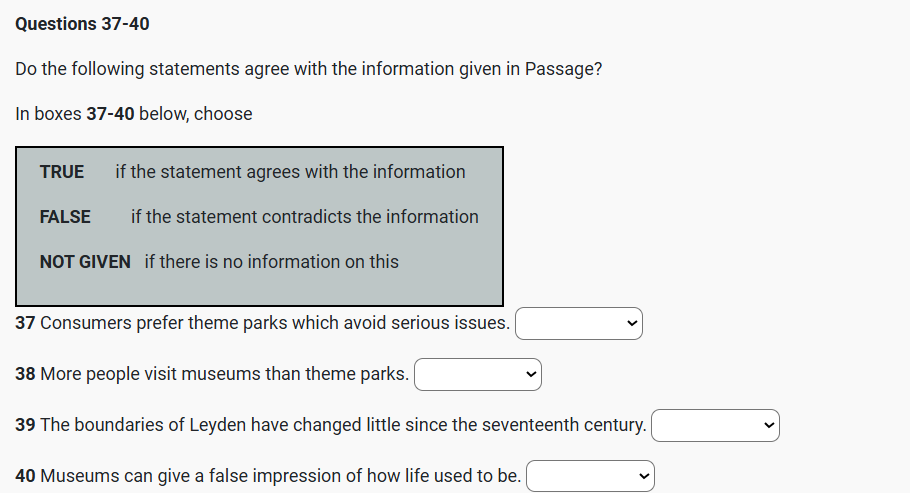
The continuous and reckless use of synthetic chemicals for the control of pests which pose a threat to agricultural crops and human health is proving to be counter-productive. Q14 Apart from engendering widespread ecological disorders, pesticides have contributed to the emergence of a new breed of chemical-resistant, highly lethal superbugs.

According to a recent study by the Food and Agriculture Organisation (FAO), Q15 more than 300 species of agricultural pests have developed resistance to a wide range of potent chemicals. Not to be left behind are the disease-spreading pests, about 100 species of which have become immune to a variety of insecticides now in use.

One glaring disadvantage of pesticides’ application is that, while destroying harmful pests, they also wipe out many useful non-targeted organisms, which keep the growth of the pest population in check. This results in what agroecologists call the ‘treadmill syndrome’. Because of their tremendous breeding potential and genetic diversity, Q19 many pests are known to withstand synthetic chemicals and bear offspring with a built-in resistance to pesticides.

The havoc that the ‘treadmill syndrome’ can bring about is well illustrated by what happened to cotton farmers in Central America. In the early 1940s, basking in the glory of chemical-based intensive agriculture, Q16 the farmers avidly took to pesticides as a sure measure to boost crop yield. The insecticide was applied eight times a year in the mid-1940s, rising to 28 in a season in the mid-1950s, following the sudden proliferation of three new varieties of chemical-resistant pests.

Q17 By the mid-1960s, the situation took an alarming turn with the outbreak of four more new pests, necessitating pesticide spraying to such an extent that 50% of the financial outlay on cotton production was accounted for by pesticides. In the early 1970s, the spraying frequently reached 70 times a season as the farmers were pushed to the wall by the invasion of genetically stronger insect species.

Most of the pesticides in the market today remain inadequately tested for properties that cause cancer and mutations as well as for other adverse effects on health, says a study by United States environmental agencies. The United States National Resource Defense Council has found that DDT was the most popular of a long list of dangerous chemicals in use.

In the face of the escalating perils from indiscriminate applications of pesticides, Q20 a more effective and ecologically sound strategy of biological control, involving the selective use of natural enemies of the pest population, is fast gaining popularity – though, as yet, it is a new field with limited potential. The advantage of biological control in contrast to other methods is that it provides a relatively low-cost, perpetual control system with a minimum of detrimental side-effects. Q21 When handled by experts, bio-control is safe, non-polluting, and self-dispersing.

The Commonwealth Institute of Biological Control (CIBC) in Bangalore, with its global network of research laboratories and field stations, is one of the most active, non-commercial research agencies engaged in pest control by setting natural predators against parasites. CIBC also serves as a clearing-house for the export and import of biological agents for pest control world-wide.

CIBC successfully used a seed-feeding weevil, native to Mexico, to control the obnoxious parthenium weed, known to exert devious influence on agriculture and human health in both India and Australia. Similarly the Hyderabad-based Regional Research Laboratory (RRL), supported by CIBC, is now trying out an Argentinian weevil for the eradication of Q25 water hyacinth, another dangerous weed, which has become a nuisance in many parts of the world. According to Mrs Kaiser Jamil of RRL, ‘The Argentinian weevil does not attack any other plant and a pair of adult bugs could destroy the weed in 4-5 days.’ CIBC is also perfecting the technique for breeding parasites that prey on ‘disapene scale’ insects – notorious defoliants of Q22 fruit trees in the US and India.

How effectively biological control can be pressed into service is proved by the following examples. In the late 1960s, when Sri Lanka’s flourishing Q24 coconut groves were plagued by leaf-mining hispides, a larval parasite imported from Singapore brought the pest under control. A natural predator indigenous to India, Neodumetia sangawani, was found useful in controlling the Rhodes Q23 grass-scale insect that was devouring forage grass in many parts of the US. By using Neochetina bruci, a beetle native to Brazil, scientists at Kerala Agricultural University freed a 12-kilometre-long canal from the clutches of the weed Salvinia molesta, popularly called ‘African Payal’ in Kerala. About 30,000 hectares of Q26 rice fields in Kerala are infested by this weed.


Boost Your Score: Practice IELTS Online with IELTS Simulator.

phone icon
8439000086
8439000087
7055710003
7055710004
IELTS Simulation 323 GMS Road, Near Ballupur Chowk, Dehradun, India

Chat on WhatsApp
email: info at ieltsband7.com

IELTS READING – LAND OF THE RISING SUN S44AT1

 IELTS Reading LAND OF THE RISING SUN reading practice test has 10 questions belongs to Culture & History / Geography (Japan) subject..

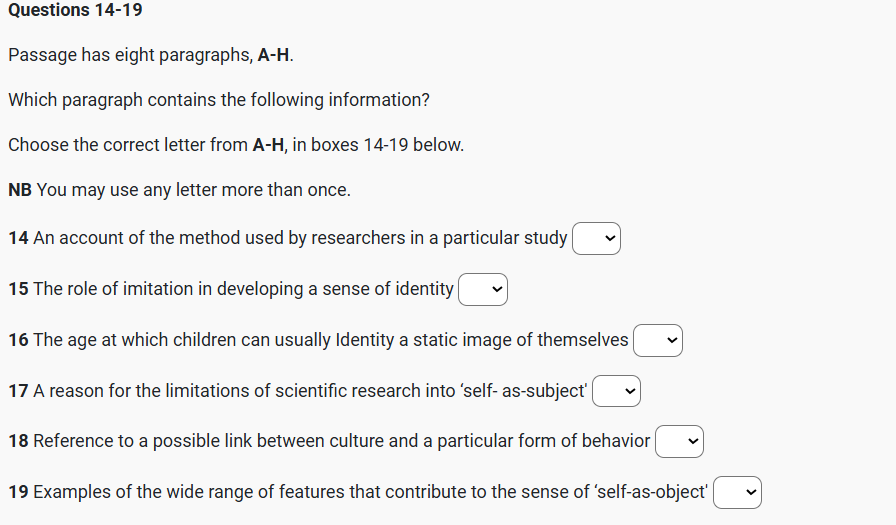
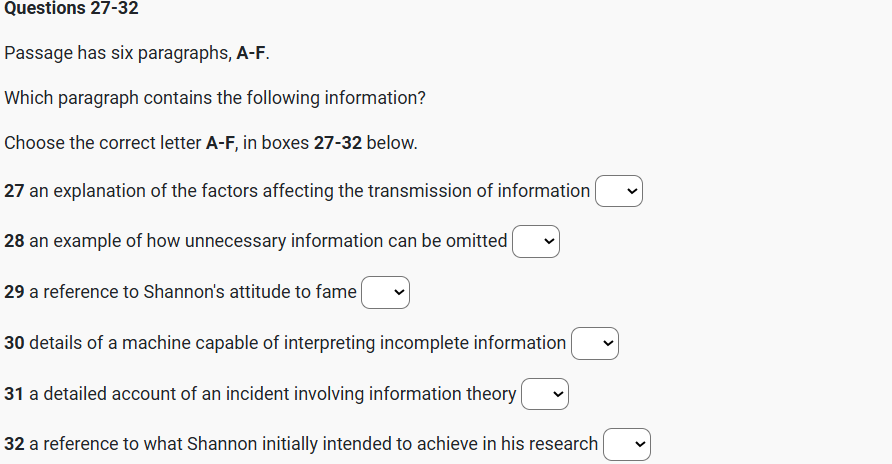
A. Japan has a significantly better record in terms of average mathematical attainment than England and Wales. Large sample international comparisons of pupils’ attainments since the 1960s have established that not only did Japanese pupils at age 13 have better scores of average attainment, Q6 but there was also a larger proportion of ‘low’ attainers in England, where, incidentally, the variation in attainment scores was much greaterQ7 The percentage of Gross National Product spent on education is reasonably similar in the two countries, so how is this higher and more consistent attainment in maths achieved?


B. Q1 Lower secondary schools in Japan cover three school years, from the seventh grade (age 13) to the ninth grade (age 15). Virtually all pupils at this stage attend state schools: only 3 percent are in the private sector. Schools are usually modem in design, set well back from the road, and spacious inside. Classrooms are large and pupils sit at single desks in rows. Lessons last for a standardised 50 minutes and are always followed by a 10-minute break, which gives the pupils a chance to let off steam. Teachers begin with a formal address and mutual bowing, and then concentrate on whole-class teaching.

Classes are large – usually about 40 – and are unstreamed. Pupils stay in the same class for all lessons throughout the school and develop considerable class identity and loyalty. Pupils attend the school in their own neighbourhood, which in theory removes ranking by school. In practice in Tokyo, because of the relative concentration of schools, there is some competition to get into the ‘better’ school in a particular area.

C. Traditional ways of teaching form the basis of the lesson and the remarkably quiet classes take their own notes of the points made and the examples demonstrated. Everyone has their own copy of the textbook supplied by the central education authority, Monbusho, as part of the concept of free compulsory education up to the age of 15. Q10 These textbooks are, on the whole, small, presumably inexpensive to produce, but well set out and logically developed. (One teacher was particularly keen to introduce colour and pictures into maths textbooks: Q10 he felt this would make them more accessible to pupils brought up in a cartoon culture.) Q2 Besides approving textbooks, Monbusho also decides the highly centralised national curriculum and how it is to be delivered.

D. Q3 Lessons all follow the same pattern. At the beginning, the pupils put solutions to the homework on the board, then the teachers comment, correct or elaborate as necessaryQ9 Pupils mark their own homework: this is an important principle in Japanese schooling as it enables pupils to see where and why they made a mistake, so that these can be avoided in future. No one minds mistakes or ignorance as long as you are prepared to learn from them.

Q11 After the homework has been discussed, the teacher explains the topic of the lesson, slowly and with a lot of repetition and elaboration. Examples are demonstrated on the board; questions from the textbook are worked through first with the class, and then the class is set questions from the textbook to do individually. Only rarely are supplementary worksheets distributed in a maths class. The impression is that the logical nature of the textbooks and their comprehensive coverage of different types of examples, combined with the relative homogeneity of the class, renders work sheets unnecessary. At this point, the teacher would circulate and make sure that all the pupils were coping well.

E. It is remarkable that large, mixed-ability classes could be kept together for maths throughout all their compulsory schooling from 6 to 15. Teachers say that they give individual help at the end of a lesson or after school, setting extra work if necessary. Q4 In observed lessons, any strugglers would be assisted by the teacher or quietly seek help from their neighbour. Carefully fostered class identity makes pupils keen to help each other – anyway, it is in their interests since the class progresses together.

This scarcely seems adequate help to enable slow learners to keep up. However, the Japanese attitude towards education runs along the lines of ‘if you work hard enough, you can do almost anything’. Parents are kept closely informed of their children’s progress and will play a part in helping their children to keep up with class, Q12 sending them to ‘Juku’ (private evening tuition) if extra help is needed and encouraging them to work harder. It seems to work, at least for 95 percent of the school population.

F. Q5 So what are the major contributing factors in the success of maths teaching? Clearly, attitudes are important. Education is valued greatly in Japanese cultureQ13 maths is recognised as an important compulsory subject throughout schooling; and the emphasis is on hard work coupled with a focus on accuracy.

Other relevant points relate to the supportive attitude of a class towards slower pupils, the lack of competition within a class, and the positive emphasis on learning for oneself and improving one’s own standard. And the view of repetitively boring lessons and learning the facts by heart, which is sometimes quoted in relation to Japanese classes, may be unfair and unjustified. No poor maths lessons were observed. They were mainly good and one or two were inspirational.


Learn From Experienced Teacher Best IELTS Coaching Dehradun Best IELTS in Dehradun Uttarakhand GMS Road BEST coaching in Dehradun Apply for Class Courses Today Good Results.

phone icon
8439000086
8439000087
7055710003
7055710004
IELTS Simulation 323 GMS Road, Near Ballupur Chowk, Dehradun, India
Chat on WhatsApp
email: info at ieltsband7.com